Russian Wildrye: A Hardy Grass for Tough Growing Conditions
If you’re looking for a grass that laughs in the face of drought and shrugs off brutal winters, Russian wildrye (Psathyrostachys juncea) might catch your attention. This perennial bunch grass has made quite a name for itself across North America, though it’s actually a world traveler that originated far from here.
What is Russian Wildrye?
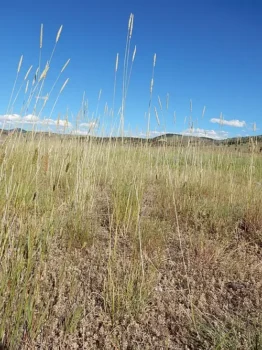
Russian wildrye is a robust perennial grass that forms dense, upright clumps reaching about 3 feet tall. Don’t let the name fool you—it’s not actually related to rye grain. This hardy grass sports narrow, blue-green to gray-green leaves with a somewhat coarse texture and produces small, inconspicuous yellowish flower spikes in early spring. Think of it as the strong, silent type of the grass world.
Where Does Russian Wildrye Come From?
Despite its widespread presence across North America, Russian wildrye is not a native species. It originally hails from the steppes of Russia, Central Asia, and Mongolia. It was introduced to North America and has since established itself across many states and provinces, from Alaska down to Texas and from coast to coast. The grass has proven quite adaptable, reproducing naturally in the wild across these regions.
- Species observed
- No observations
Why Gardeners Choose Russian Wildrye
Russian wildrye has some impressive credentials that make it appealing for certain situations:
- Exceptional drought tolerance: Once established, this grass can thrive with just 10-45 inches of annual precipitation
- Extreme cold hardiness: It can survive temperatures as low as -43°F (USDA zones 3-7)
- Low maintenance: Requires minimal fertilization and care
- Fast growth: Establishes quickly with rapid regrowth after cutting
- Erosion control: Excellent for stabilizing slopes and preventing soil erosion
Where Russian Wildrye Fits in Your Landscape
This isn’t your typical lawn grass, but it shines in specific landscape situations:
- Xeriscape and drought-tolerant gardens
- Naturalized prairie areas (in non-native contexts)
- Slope stabilization projects
- Low-maintenance buffer zones
- Areas with challenging growing conditions
Russian wildrye prefers upland conditions and rarely tolerates wetlands, making it ideal for well-drained sites. Its dense, coarse foliage provides year-round structure, though it becomes more porous in winter.
Growing Conditions and Care
Russian wildrye is remarkably adaptable but has some preferences:
- Soil: Adapts to medium and fine-textured soils; pH range of 6.5-9.0
- Sunlight: Full sun required—shade intolerant
- Water: Low water needs once established; excellent drought tolerance
- Climate: Needs at least 90 frost-free days; thrives in continental climates
- Soil depth: Develops roots to at least 16 inches deep
Planting and Establishment
Getting Russian wildrye started is relatively straightforward:
- Plant from seed in fall or early spring
- Seeds are commercially available (about 162,600 seeds per pound)
- Expect slow initial spread and low seedling vigor—be patient
- Once established, growth rate becomes rapid
- No special cold treatment required for seeds
Considerations Before Planting
While Russian wildrye has useful qualities, there are important factors to consider:
Limited wildlife value: This grass provides minimal benefits to pollinators due to its wind-pollinated, inconspicuous flowers. Wildlife benefits are largely unknown, suggesting limited ecological value.
Non-native status: As a non-native species, Russian wildrye doesn’t support local ecosystems the way native grasses do. While it’s not classified as invasive, it also doesn’t contribute to native biodiversity.
Native Alternatives to Consider
Before choosing Russian wildrye, consider these native grass alternatives that provide similar drought tolerance while supporting local wildlife:
- Buffalo grass (Bouteloua dactyloides) for Great Plains regions
- Blue grama (Bouteloua gracilis) for western areas
- Western wheatgrass (Pascopyrum smithii) for northern regions
- Little bluestem (Schizachyrium scoparium) for varied conditions
The Bottom Line
Russian wildrye is undeniably tough and useful for challenging sites where few other grasses will thrive. If you need something for erosion control, extremely dry conditions, or areas where native alternatives won’t establish, it can be a practical choice. However, for most gardening situations, native grass alternatives will provide similar benefits while supporting local ecosystems and wildlife.
Consider your specific goals: if you’re creating habitat or supporting biodiversity, native options are the way to go. If you’re simply trying to stabilize soil or cover a challenging site with minimal maintenance, Russian wildrye might fit the bill—just remember it’s essentially the landscape equivalent of a reliable but non-local employee.