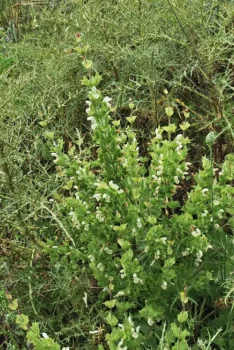
Salvia samuelssonii: The Mystery Sage That Has Gardeners Scratching Their Heads
If you’ve stumbled across the name Salvia samuelssonii in your gardening research, you’re not alone in feeling puzzled. This particular sage species is something of an enigma in the gardening world, with virtually no reliable information available about its characteristics, growing requirements, or even its existence as a currently recognized species.
The Case of the Missing Information
Here’s the thing about Salvia samuelssonii – it’s like the gardening equivalent of a ghost story. While the name appears in some botanical databases, finding concrete details about this plant is nearly impossible. This could mean several things:
- It might be a recently described species with limited documentation
- It could be an outdated taxonomic name that’s no longer in use
- There may be a spelling variation or nomenclature error
- It might be an extremely rare species with very limited study
What We Don’t Know (And Why That Matters)
Unfortunately, we lack critical information that every gardener needs:
- Common names or alternative names
- Native range and geographical distribution
- Growth habits and mature size
- Preferred growing conditions
- USDA hardiness zones
- Pollinator and wildlife benefits
- Care requirements and propagation methods
Without this essential information, it’s impossible to recommend whether or how to grow this particular sage.
What Should Gardeners Do?
If you’re specifically searching for Salvia samuelssonii, here’s our advice:
- Double-check your source – there might be a spelling error or confusion with another species
- Consult with botanical institutions or herbarium specialists
- Consider whether you might be looking for a similar-sounding Salvia species
- Contact the organization or publication where you first encountered this name
Tried and True Salvia Alternatives
While we can’t guide you in growing the mysterious S. samuelssonii, the Salvia genus is packed with fantastic, well-documented species perfect for gardens. Consider these reliable alternatives:
- Salvia greggii (Autumn Sage) – a compact, long-blooming favorite
- Salvia argentea (Silver Sage) – known for its stunning silvery foliage
- Salvia nemorosa (Woodland Sage) – excellent for perennial borders
- Native salvias specific to your region for ecological benefits
The Bottom Line
Sometimes in gardening, we encounter plants that are more mystery than reality. Salvia samuelssonii appears to be one of those cases. Rather than risk disappointment with an unknown quantity, we recommend exploring the many well-documented, readily available Salvia species that can bring proven beauty, pollinator benefits, and gardening success to your landscape.
If you do manage to track down reliable information about S. samuelssonii, we’d love to hear about it – gardening mysteries are always worth solving!