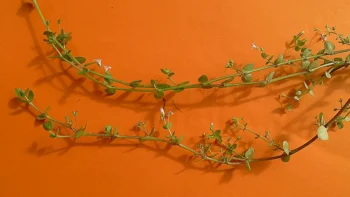
Salzmann’s Mille Graines: A Lesser-Known Introduced Perennial
If you’ve stumbled across the name Salzmann’s mille graines (Oldenlandia salzmannii), you’re likely dealing with one of the more mysterious members of the plant world. This small perennial forb has quietly established itself in parts of the southeastern United States, but don’t expect to find much fanfare about it in your typical gardening circles.
What Exactly Is Salzmann’s Mille Graines?
Salzmann’s mille graines belongs to the coffee family (Rubiaceae) and goes by the scientific name Oldenlandia salzmannii. You might also see it listed under its synonym Hedyotis salzmannii in older botanical references. As a forb, this plant is herbaceous—meaning it lacks the woody stems of shrubs and trees—and dies back to the ground each winter before returning the following growing season.
The name mille graines literally means thousand seeds in French, which gives us a hint about this plant’s reproductive strategy, though specific details about its appearance and growth habits remain somewhat elusive in horticultural literature.
Where Does It Grow?
This species has made its home in Alabama and Florida, where it grows as an introduced species. Unlike many non-native plants that struggle to establish, Salzmann’s mille graines has managed to reproduce spontaneously in the wild and persist without human intervention.
- Species observed
- No observations
The Gardening Dilemma
Here’s where things get tricky for gardeners. While this plant isn’t officially listed as invasive or noxious, the lack of comprehensive horticultural information makes it a bit of a wild card for home landscapes. We simply don’t have solid data about:
- Specific growing requirements
- USDA hardiness zones
- Mature size and growth rate
- Aesthetic qualities
- Benefits to pollinators and wildlife
- Potential garden applications
Should You Plant It?
Given the information gaps and its non-native status, most gardeners would be better served exploring native alternatives. The southeastern United States boasts an incredible diversity of native wildflowers and forbs that offer well-documented benefits to local ecosystems and come with established growing guidelines.
If you’re specifically interested in small perennial forbs for Alabama or Florida gardens, consider researching native options like wild bergamot, coral honeysuckle, or various native asters. These plants come with the added benefits of supporting local wildlife and having predictable growth habits.
A Plant Shrouded in Mystery
Salzmann’s mille graines remains something of an enigma in the gardening world. While it has successfully established itself in parts of the Southeast, the lack of detailed horticultural information suggests it’s not a priority for garden cultivation. Sometimes the most interesting plants are the ones that prefer to keep their secrets, quietly going about their business in the wild while gardeners focus on their showier, better-documented cousins.
For now, this little forb serves as a reminder that there’s still much to learn about the plant world, even in our own backyards.