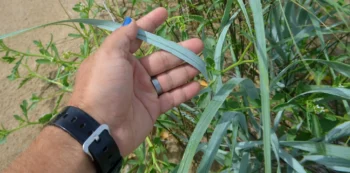
Sand Ryegrass: Think Twice Before Planting This Non-Native Grass
Sand ryegrass (Leymus arenarius) might catch your eye with its tall, architectural form and blue-green foliage, but this European native comes with some serious baggage that gardeners need to know about. While it’s undeniably striking and tough as nails, this perennial grass has earned itself a spot on the proceed with extreme caution list in many regions.
What Is Sand Ryegrass?
Sand ryegrass, also known by its scientific name Leymus arenarius (formerly Elymus arenarius), is a robust perennial grass that originally hails from the coastal regions of northern Europe and Asia. This isn’t your typical lawn grass – we’re talking about a substantial plant that can reach 3 feet tall and spreads aggressively through underground rhizomes.
With its coarse-textured, dark green foliage and rapid growth rate, sand ryegrass certainly makes a statement in the landscape. The plant produces yellow flowers in mid-spring, though they’re not particularly showy, and brown seeds that persist into summer.
Where Does It Grow?
As a non-native species, sand ryegrass has established itself across various regions in North America, including Ontario, Quebec, Northwest Territories, Connecticut, Illinois, Indiana, Michigan, New York, and Wisconsin. It’s adapted well to life outside its native range – perhaps a little too well.
- Species observed
- No observations
The Invasive Issue: Why You Should Think Twice
Here’s where things get complicated. In Wisconsin, sand ryegrass has been classified as Prohibited/Restricted due to its invasive tendencies. This classification isn’t handed out lightly – it means the plant has demonstrated the ability to escape cultivation, spread rapidly, and potentially disrupt local ecosystems.
The grass’s rhizomatous growth habit and rapid vegetative spread rate make it particularly problematic. Once established, it can quickly colonize an area and outcompete native plants. While it might seem like the perfect solution for erosion control or difficult sites, the long-term ecological consequences aren’t worth the short-term benefits.
Growing Conditions and Characteristics
If you’re curious about why sand ryegrass spreads so successfully, it’s because this plant is remarkably adaptable:
- Soil preferences: Thrives in coarse, sandy soils but adapts to medium-textured soils as well
- pH tolerance: Grows in slightly acidic to neutral soils (5.7-6.5 pH)
- Water needs: Medium moisture requirements with good drought tolerance once established
- Sun exposure: Intolerant of shade, requires full sun
- Salt tolerance: Exceptionally high, making it attractive for coastal areas
- Temperature range: Hardy in zones roughly equivalent to USDA zones 3-7
The plant has a wetland status of Facultative Upland in both Midwest and Northcentral/Northeast regions, meaning it usually grows in non-wetland areas but can tolerate some moisture.
Better Alternatives: Native Options to Consider
Instead of risking the ecological disruption that sand ryegrass can cause, consider these native alternatives that can provide similar benefits without the invasive behavior:
- Prairie dropseed (Sporobolus heterolepis): Beautiful native grass with excellent drought tolerance
- Little bluestem (Schizachyrium scoparium): Gorgeous fall color and excellent for erosion control
- Switchgrass (Panicum virgatum): Tall native grass perfect for screening and wildlife habitat
- American beachgrass (Ammophila breviligulata): For coastal areas, this native provides erosion control without invasive tendencies
The Bottom Line
While sand ryegrass might seem like an attractive, low-maintenance option for challenging sites, its invasive status in several regions makes it a poor choice for responsible gardeners. The plant’s aggressive spreading habit and ability to outcompete native species mean that today’s convenient ground cover could become tomorrow’s ecological headache.
Instead of taking the risk, explore native grass alternatives that can provide similar benefits while supporting local ecosystems and wildlife. Your garden – and your local environment – will thank you for making the more sustainable choice.
Remember: good gardening isn’t just about what works in your yard, it’s about what works for your entire regional ecosystem. When it comes to sand ryegrass, the safest choice is to pass it by.