Santa Maria Feverfew: A Plant You Should Definitely Avoid in Your Garden
When it comes to gardening, not all plants are created equal. Some are garden heroes, while others are botanical villains in disguise. Santa Maria feverfew (Parthenium hysterophorus) falls squarely into the latter category. This annual forb might look innocent enough with its small white flowers, but don’t let its delicate appearance fool you – this is one plant you’ll want to keep far away from your garden.
What is Santa Maria Feverfew?
Santa Maria feverfew is an annual forb, which simply means it’s a non-woody plant that completes its life cycle in one growing season. Originally from Central and South America, this plant has hitchhiked its way across the globe, earning a reputation as one of the world’s most troublesome weeds. In the United States, it’s considered a non-native species that has established itself in the wild across 26 states and territories, from coast to coast.
Where Does It Grow?
This aggressive spreader has made itself at home in Alabama, Arkansas, Connecticut, Delaware, District of Columbia, Florida, Georgia, Hawaii, Illinois, Kansas, Louisiana, Maryland, Massachusetts, Michigan, Mississippi, Missouri, New Jersey, New York, Ohio, Oklahoma, Pennsylvania, South Carolina, Texas, Virginia, Puerto Rico, and the Virgin Islands. Basically, if you live in the eastern two-thirds of the United States, there’s a good chance this plant is lurking somewhere nearby.
- Species observed
- No observations
Why You Should Avoid This Plant
Here’s where things get serious. Santa Maria feverfew isn’t just an unwelcome garden guest – it’s a health hazard and ecological nightmare rolled into one seemingly innocent package:
- Severe allergic reactions: This plant can cause serious skin irritation, respiratory problems, and allergic dermatitis in humans and animals
- Aggressive spreader: It reproduces rapidly and can quickly dominate an area, crowding out native plants
- Hard to control: Once established, it’s notoriously difficult to eliminate
- Poor wildlife value: It provides little to no benefit for native pollinators or wildlife
How to Identify Santa Maria Feverfew
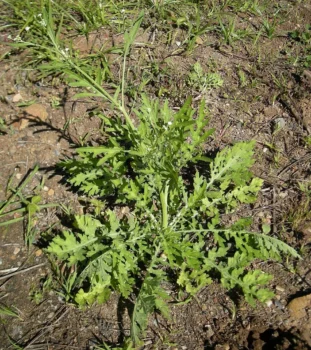
Knowledge is power when it comes to identifying this troublemaker. Santa Maria feverfew typically grows 3-6 feet tall and spreads 2-4 feet wide. It has deeply lobed, somewhat triangular leaves that give it a distinctive appearance. The small, white, daisy-like flowers might look pretty, but they’re your warning sign that trouble is brewing.
As a forb, it lacks the woody stems of shrubs and trees, and since it’s an annual, individual plants will die back each winter – but not before dropping thousands of seeds to ensure next year’s invasion.
Growing Conditions (Not That You Should!)
Part of what makes Santa Maria feverfew so problematic is its adaptability. This plant thrives in USDA hardiness zones 8-11 but can grow as an annual in cooler areas. It’s remarkably tolerant of different soil types and moisture levels, though it generally prefers full sun to partial shade.
The wetland status varies by region – it can handle both wet and dry conditions in most areas, though it tends to stay in upland areas in Hawaii and the northern regions. This flexibility is exactly why it’s become such a successful invader.
What to Do If You Find It
If you discover Santa Maria feverfew on your property, act quickly:
- Wear protective clothing, including gloves and long sleeves, when handling the plant
- Remove plants before they flower and set seed
- Bag and dispose of plant material – don’t compost it
- Monitor the area for new seedlings and remove them promptly
- Consider consulting with local extension services for large infestations
Better Native Alternatives
Instead of dealing with the headaches of Santa Maria feverfew, consider these native alternatives that will actually benefit your garden and local ecosystem:
- Wild bergamot (Monarda species): Native aromatic plants with showy flowers that pollinators adore
- Partridge pea (Chamaecrista fasciculata): A native annual with bright yellow flowers
- Native asters: Beautiful fall-blooming natives that provide crucial late-season nectar
- Black-eyed Susan (Rudbeckia species): Cheerful, easy-to-grow natives with long bloom periods
The Bottom Line
Santa Maria feverfew is a perfect example of why exotic doesn’t always mean desirable in the garden world. This aggressive, allergenic invader has no place in responsible gardening practices. If you encounter it, remove it safely and replace it with native alternatives that will support local wildlife and provide beauty without the botanical baggage.
Remember, every plant we choose for our gardens is a vote for the kind of landscape we want to see in our communities. Let’s make sure we’re voting for the good guys!