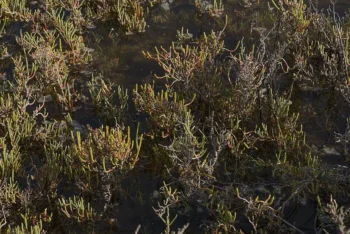
Sarcocornia fruticosa: A Tough-as-Nails Coastal Succulent for Challenging Gardens
If you’ve ever walked along a Mediterranean shoreline or Atlantic coast, you might have noticed small, peculiar plants that look more like green coral than traditional garden fare. Meet Sarcocornia fruticosa, a remarkable little succulent that’s perfectly at home where most plants fear to tread – in salty, sandy, and downright hostile coastal conditions.
What Exactly Is Sarcocornia fruticosa?
This hardy perennial belongs to the amaranth family and goes by several scientific aliases, including Arthrocnemum fruticosum and Salicornia fruticosa – names you might encounter in older gardening references. Don’t let the lack of a catchy common name fool you; this plant has serious personality and some impressive survival skills.
Where Does It Come From?
Sarcocornia fruticosa calls the Mediterranean region home, along with Atlantic coastal areas of Europe and North Africa. It’s evolved to thrive in some of the planet’s most challenging growing conditions – think salt spray, sandy soil, and scorching sun.
The Look: Small but Striking
This isn’t your typical showy garden star, but Sarcocornia fruticosa has its own understated charm:
- Forms low, spreading mounds of jointed, fleshy stems
- Succulent segments give it an almost architectural appearance
- Green during growing season, turning attractive reddish hues in fall and winter
- Tiny, barely noticeable flowers that are wind-pollinated
- Typically grows 1-3 feet tall and wide
Why You Might Want to Grow It
Sarcocornia fruticosa isn’t for every garden, but if you’re dealing with challenging coastal conditions, it could be your new best friend:
- Salt tolerance champion: Thrives where salt spray kills other plants
- Drought resistant: Once established, needs minimal watering
- Low maintenance: Practically grows itself in the right conditions
- Erosion control: Excellent for stabilizing sandy or rocky slopes
- Year-round interest: Evergreen structure with seasonal color changes
Perfect Garden Situations
This specialized plant shines in specific landscape scenarios:
- Coastal gardens exposed to salt spray
- Mediterranean-style landscapes
- Rock gardens with excellent drainage
- Areas with poor, sandy, or rocky soil
- Slopes needing erosion control
- Water-wise garden designs
Growing Conditions and Care
Success with Sarcocornia fruticosa is all about mimicking its natural habitat:
- Sunlight: Full sun is essential
- Soil: Well-draining sandy or rocky soil; avoid heavy clay
- Water: Drought tolerant once established; avoid overwatering
- Climate: Hardy in USDA zones 8-11
- Salt tolerance: Actually benefits from some salt exposure
Planting and Care Tips
Getting started with this coastal survivor is straightforward:
- Plant in spring after last frost
- Ensure excellent drainage – this plant hates wet feet
- Water sparingly; established plants are extremely drought tolerant
- No fertilizer needed – it thrives in poor soils
- Minimal pruning required; just remove any dead sections
- Mulch lightly with gravel or sand rather than organic materials
Wildlife and Pollinator Value
While Sarcocornia fruticosa won’t attract clouds of butterflies, it does provide some ecological benefits in coastal environments. Its dense, low growth offers shelter for small coastal creatures, and the seeds may provide food for some bird species.
The Bottom Line
Sarcocornia fruticosa isn’t a plant for every garden or every gardener. But if you’re battling challenging coastal conditions, poor soil, or extreme drought, this tough little succulent might just be the solution you’ve been looking for. It’s proof that sometimes the most unassuming plants are the ones that can handle whatever nature throws at them.
Before planting, check with local authorities about any regulations regarding non-native plants in your area, and consider native alternatives that might provide similar benefits for your specific region’s wildlife.