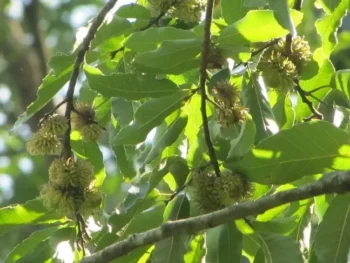
Sawtooth Oak: A Non-Native Tree with Invasive Tendencies
If you’ve ever wondered about that fast-growing oak tree with the distinctively serrated leaves, you’ve likely encountered the sawtooth oak (Quercus acutissima). While this tree might seem like an attractive addition to your landscape, there are some important considerations every gardener should know before planting one.
What is Sawtooth Oak?
Sawtooth oak is a perennial tree species that typically grows to impressive heights of 13-16 feet or more, developing into a substantial shade tree with a single trunk. True to its name, this oak is easily recognized by its distinctive saw-toothed leaf edges that set it apart from our native oak species.
Native Status and Geographic Distribution
Here’s where things get complicated: sawtooth oak is not native to North America. Originally from East Asia (including China, Korea, and Japan), this tree was introduced to the United States and has since established itself across several states. Currently, you can find sawtooth oak growing in Alabama, Georgia, Louisiana, Maryland, Mississippi, North Carolina, Pennsylvania, and Virginia, where it reproduces on its own without human assistance.
- Species observed
- No observations
The Invasive Concern
Before you consider planting a sawtooth oak, it’s crucial to understand its invasive potential. This species has earned concerning designations across multiple states:
- Alabama: Listed on the Watch List
- Delaware: Designated as Watch status
- Wisconsin: Completely Prohibited
These classifications exist because sawtooth oak can spread aggressively, potentially outcompeting native plant species and disrupting local ecosystems.
Growing Conditions and Characteristics
Sawtooth oak is adaptable and thrives in USDA hardiness zones 5-9. It prefers full sun and well-drained soils, becoming quite drought-tolerant once established. This tree is known for its rapid growth rate, which contributed to its initial popularity as a landscape tree.
The tree produces acorns that mature in two years and can provide food for wildlife, offering about 5-10% of the diet for large animals, small mammals, and terrestrial birds, though these animals don’t typically use it for cover.
Why We Don’t Recommend Planting Sawtooth Oak
Given its invasive status and potential to harm native ecosystems, we strongly advise against planting sawtooth oak. Instead, consider these fantastic native oak alternatives that provide similar benefits without the ecological risks:
- White oak (Quercus alba) – Majestic and long-lived
- Red oak (Quercus rubra) – Fast-growing with brilliant fall color
- Live oak (Quercus virginiana) – Evergreen option for warmer zones
- Bur oak (Quercus macrocarpa) – Extremely hardy and drought-tolerant
Supporting Native Ecosystems
Native oak species support hundreds of butterfly and moth species, provide crucial habitat for birds, and have co-evolved with local wildlife over thousands of years. By choosing native alternatives, you’ll create a landscape that truly supports your local ecosystem while avoiding the potential problems associated with invasive species.
Remember, being a responsible gardener means considering not just what looks good in your yard, but what’s best for the broader environment. When it comes to sawtooth oak, the best choice is to skip it entirely in favor of our beautiful native oak species.