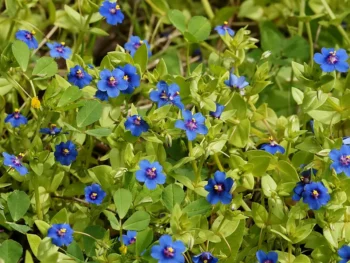
Scarlet Pimpernel: The Cheerful Little Weather Predictor for Your Garden
Meet scarlet pimpernel (Anagallis arvensis), a charming little annual that’s earned the delightful nickname poor man’s weather glass for its habit of closing its tiny flowers when storms approach. This petite European native has made itself at home across North America, bringing a splash of bright color to gardens and wild spaces alike.
What Makes Scarlet Pimpernel Special
Scarlet pimpernel is a low-growing annual forb that produces masses of small, star-shaped flowers in brilliant orange-red hues, though you might occasionally spot blue or white varieties. These cheerful blooms, measuring just about a quarter-inch across, have an endearing quirk – they open wide in sunny weather and snap shut when clouds roll in, making this little plant nature’s own barometer.
The plant grows as a spreading ground cover, typically reaching 4-12 inches in height with a similar spread. Its small, oval leaves are arranged oppositely along trailing stems, creating a neat carpet effect when grown in groups.
Where You’ll Find Scarlet Pimpernel
Originally from Europe, North Africa, and western Asia, scarlet pimpernel has naturalized throughout North America. You can find it growing wild in all 50 states, plus Canadian provinces from coast to coast, as well as in Puerto Rico, Guam, and other territories. This adaptable little plant has proven quite successful at establishing itself in diverse climates and conditions.
- Species observed
- No observations
Garden Roles and Design Ideas
Despite being non-native, scarlet pimpernel can play several useful roles in your garden:
- Ground cover: Excellent for filling in bare spots or covering slopes
- Rock garden accent: Perfect for tucking into crevices and small spaces
- Annual border filler: Provides continuous color throughout the growing season
- Cottage garden charm: Adds old-world appeal to informal landscapes
- Wildlife habitat: Attracts small pollinators like tiny bees and flies
Growing Conditions and Care
One of scarlet pimpernel’s biggest selling points is how easy it is to grow. This undemanding annual thrives in:
- Sunlight: Full sun (6+ hours daily) for best flowering
- Soil: Almost any well-draining soil, including poor soils
- Water: Drought tolerant once established, but appreciates occasional watering
- Climate: Hardy in USDA zones 2-11 as an annual
The plant’s wetland status varies by region – it can handle both dry upland sites and occasionally wet areas, making it quite versatile.
Planting and Maintenance Tips
Scarlet pimpernel is refreshingly low-maintenance:
- Sow seeds directly in spring after frost danger passes
- Seeds germinate easily in warm soil
- Self-sows readily, so expect volunteers next year
- Deadhead spent flowers to prevent excessive spreading if desired
- No fertilizer needed – it actually prefers lean soils
- Minimal watering required once established
Things to Consider
While scarlet pimpernel isn’t considered invasive, it does self-seed enthusiastically and can spread more than some gardeners prefer. Keep this in mind if you like a highly controlled garden aesthetic. The plant’s trailing habit means it may pop up in unexpected places.
Since this is a non-native species, consider balancing your garden with native alternatives that provide similar benefits. Native ground covers like wild strawberry (Fragaria species) or native sedums can offer comparable coverage while supporting local ecosystems more directly.
The Bottom Line
Scarlet pimpernel brings cheerful color, easy care, and a touch of weather-watching whimsy to gardens. While it’s not native to North America, it’s generally well-behaved and provides genuine benefits for small pollinators. If you’re looking for a low-maintenance annual ground cover that thrives in tough conditions, scarlet pimpernel might just be your new garden friend – just be prepared for its enthusiastic self-seeding habits!
Whether you’re filling problem spots in a rock garden or adding casual charm to a cottage-style landscape, this little weather prophet is ready to brighten your garden with minimal fuss and maximum personality.