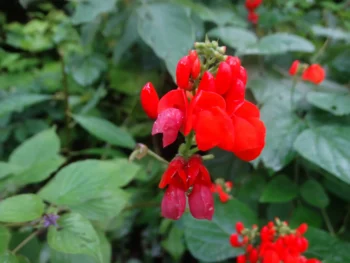
Scarlet Runner Bean: A Climbing Beauty for Your Garden
Meet the scarlet runner bean (Phaseolus coccineus), a vigorous climbing annual that brings both beauty and bounty to gardens across the country. While this striking vine isn’t native to North America, it has charmed gardeners for generations with its brilliant red flowers and edible pods. Whether you’re looking to add vertical interest to your space or grow something deliciously different, the scarlet runner bean might just be the climbing companion your garden needs.
What Makes Scarlet Runner Beans Special?
Don’t let the bean in the name fool you – this plant is as much about show as it is about harvest. Scarlet runner beans are vigorous climbing vines that can reach impressive heights of 6-12 feet in a single growing season. Their heart-shaped leaves create lush green backdrops for clusters of vibrant scarlet-red flowers that seem to glow in the garden. These blooms aren’t just pretty faces either – they’re magnets for hummingbirds and beneficial pollinators like bees.
As a forb herb, this annual lacks woody tissue but makes up for it with enthusiastic growth. The plant produces both ornamental value and edible rewards, with tender young pods that can be harvested like snap peas or left to mature for dried beans.
Where Scarlet Runner Beans Grow
Originally native to the mountainous regions of Central America and Mexico, scarlet runner beans have adapted to various climates across the United States. You’ll find established populations growing in Massachusetts, North Carolina, Ohio, Pennsylvania, South Carolina, and Virginia, as well as in Guam, U.S. Minor Outlying Islands, and the Virgin Islands. This non-native species has proven quite capable of reproducing on its own in the wild, though it’s not considered invasive.
- Species observed
- No observations
Garden Design and Landscape Role
Scarlet runner beans excel as vertical elements in garden design. Here’s how they can work in your landscape:
- Privacy screens: Plant along fences or trellises to create natural barriers
- Cottage garden charm: Perfect for informal, romantic garden styles
- Edible landscaping: Combines beauty with function in kitchen gardens
- Container growing: Works well in large pots with adequate support
- Quick coverage: Ideal for covering unsightly structures or creating shade
Growing Conditions and Care
Scarlet runner beans prefer cooler conditions than their common bean cousins, making them excellent choices for northern gardens or areas with mild summers. Here’s what they need to thrive:
Sun and Soil: Full sun exposure with well-draining, moderately fertile soil works best. They’re not particularly fussy about soil type but appreciate consistent moisture.
Climate Preferences: These beans actually prefer cooler temperatures and may struggle in hot, humid climates. They perform best in USDA zones 2-7 as annuals, though they can act as short-lived perennials in zones 8-10.
Support Systems: Since they’re enthusiastic climbers, provide sturdy support structures like trellises, poles, or fences. They can easily reach 8-12 feet tall with proper support.
Planting and Care Tips
Getting started with scarlet runner beans is straightforward:
- Timing: Plant seeds directly in the garden after the last frost date
- Spacing: Space seeds 4-6 inches apart at the base of your support structure
- Depth: Plant seeds 1-2 inches deep in well-prepared soil
- Watering: Provide consistent moisture, especially during flowering and pod development
- Harvesting: Pick young pods for fresh eating or allow to mature for dried beans
Pollinator and Wildlife Benefits
One of the most delightful aspects of growing scarlet runner beans is watching the parade of visitors they attract. The tubular red flowers are specifically adapted to attract hummingbirds, which serve as their primary pollinators. You’ll also see various bee species working the blooms, making this plant a valuable addition to pollinator gardens.
Should You Grow Scarlet Runner Beans?
While scarlet runner beans aren’t native to North America, they’re generally well-behaved garden citizens that offer unique benefits. They’re particularly valuable for gardeners wanting to attract hummingbirds or create quick vertical interest. However, if you’re committed to native-only gardening, consider these alternatives:
- American groundnut (Apios americana): Native climbing vine with edible tubers
- Wild bean (Strophostyles helvola): Native annual bean with similar growth habits
- Cardinal flower (Lobelia cardinalis): Native red-flowered hummingbird magnet
The choice is yours, but if you decide to grow scarlet runner beans, you’ll be rewarded with a fast-growing, beautiful vine that brings both wildlife and harvest opportunities to your garden. Just remember to provide that sturdy support – these enthusiastic climbers mean business!