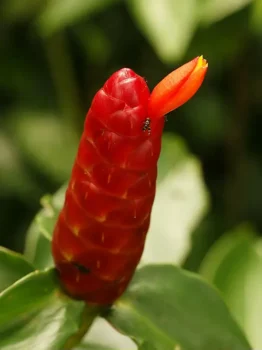
Scarlet Spiral-Ginger: A Tropical Showstopper for Your Garden
If you’re looking to add some serious tropical flair to your garden, the Scarlet Spiral-Ginger (Costus woodsonii) might just catch your eye. This striking perennial is known for its distinctive spiral arrangement of bright red bracts that look like nature’s own spiral staircase. But before you fall head-over-heels for this beauty, let’s dive into what makes this plant tick and whether it’s the right fit for your garden.
What Makes Scarlet Spiral-Ginger Special?
Costus woodsonii is a forb – essentially a non-woody plant that puts all its energy into those gorgeous above-ground displays rather than building sturdy trunks. What really sets this plant apart is its aesthetic appeal: those spiral-arranged scarlet bracts create a stunning architectural element that’s hard to miss. The large, lush tropical foliage provides an excellent backdrop for the vibrant red flowering structures.
Where Does It Come From?
Originally native to Central America, particularly Costa Rica and Panama, this tropical beauty has found its way to other warm climates around the world. In the United States, you’ll find Costus woodsonii established in Hawaii, where it has naturalized and reproduces on its own in the wild.
- Species observed
- No observations
It’s worth noting that while this plant has adapted well to Hawaiian conditions, it’s not native to the islands. If you’re passionate about supporting local ecosystems, you might want to consider native Hawaiian alternatives that provide similar tropical appeal while supporting indigenous wildlife.
Growing Conditions and Care
Scarlet Spiral-Ginger is surprisingly adaptable, though it definitely has its preferences. Here’s what you need to know:
- Climate: Thrives in USDA hardiness zones 9-11, but can be grown as an annual or houseplant in cooler areas
- Light: Prefers partial shade – too much direct sun can scorch those beautiful leaves
- Soil: Loves moist, well-draining soil rich in organic matter
- Water: Needs consistent moisture but doesn’t like to sit in waterlogged soil
- Humidity: High humidity is key for optimal growth and flowering
Perfect Garden Roles
This plant really shines as a specimen plant in tropical and subtropical gardens. Its architectural form and eye-catching color make it perfect for:
- Creating focal points in garden beds
- Adding vertical interest to landscape designs
- Container gardening (especially useful in cooler climates)
- Tropical-themed garden areas
Wildlife and Pollinator Benefits
Here’s where Scarlet Spiral-Ginger really earns its keep in the garden ecosystem. Those bright red bracts aren’t just for show – they’re specifically designed to attract hummingbirds, which serve as the plant’s primary pollinators. Butterflies also find the nectar-rich flowers irresistible, making this plant a valuable addition for pollinator gardens.
Planting and Care Tips
Getting your Scarlet Spiral-Ginger established is relatively straightforward:
- Plant in spring after the last frost in cooler areas
- Choose a location with morning sun and afternoon shade
- Improve soil with compost or other organic matter
- Water regularly, especially during dry spells
- Apply organic mulch to retain moisture and suppress weeds
- Protect from strong winds, which can damage the large leaves
- In zones below 9, consider container growing so you can bring plants indoors during winter
The Bottom Line
Costus woodsonii offers undeniable tropical beauty and supports pollinators, making it an attractive option for gardeners seeking dramatic, exotic plants. However, since it’s not native to most areas where it’s grown, consider balancing your plant choices with native species that provide similar benefits while supporting local ecosystems.
Whether you decide to grow Scarlet Spiral-Ginger or opt for native alternatives, the key is creating a garden that brings you joy while being mindful of your local environment. After all, the best garden is one that makes both you and your local wildlife happy!