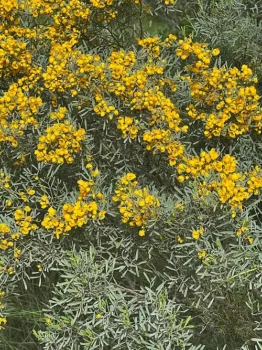
Scented Senna: What You Need to Know About This Uncommon Plant
If you’ve stumbled across the name scented senna or its botanical designation Senna artemisioides ×coriacea, you might be wondering what exactly this plant is and whether it belongs in your garden. Let’s dive into what we know about this rather mysterious member of the legume family.
The Basics: What Is Scented Senna?
Scented senna, also known as desert cassia, is a perennial shrub that typically grows as a multi-stemmed woody plant. You can expect it to reach heights of around 13 to 16 feet, though it usually stays shorter than that. Like most shrubs, it develops several stems that emerge from or near the ground level, giving it that classic bushy appearance we associate with shrubby plants.
This plant comes with quite a collection of botanical aliases, having been known by various scientific names over the years including Cassia eremophila and Cassia nemophila, among others. The world of plant taxonomy can be a bit of a name-shuffling game sometimes!
Where Does It Grow?
Here’s where things get interesting – and a bit concerning from a native gardening perspective. Scented senna is not native to North America. It’s an introduced species that has established itself and now reproduces on its own in the wild. Currently, it’s been documented growing in California, where it has managed to naturalize without human assistance.
- Species observed
- No observations
The Information Gap
Here’s the honest truth about scented senna: there’s a surprising amount we don’t know about this particular plant. Its invasive status, noxious weed classification, rarity, wetland preferences, wildlife benefits, and specific growing requirements are all question marks in the botanical record. This lack of information makes it difficult to give you a definitive thumbs up or thumbs down about including it in your garden.
Should You Plant Scented Senna?
Given that this is a non-native species with unknown ecological impacts, we’d suggest taking a cautious approach. While we can’t definitively say it’s problematic, the fact that it’s already establishing itself in California’s wild spaces without human help raises some eyebrows.
Instead of rolling the dice with scented senna, why not consider some fantastic native alternatives? California has an incredible array of native shrubs that offer:
- Proven benefits for local wildlife and pollinators
- Adaptation to local climate conditions
- Lower maintenance once established
- Support for the local ecosystem
Better Native Options to Consider
If you’re drawn to the idea of a shrubby legume (plants in the pea family), California offers some wonderful native choices like:
- California native lupines for stunning flower spikes
- Ceanothus species for beautiful blue blooms and drought tolerance
- Native Eriogonum (buckwheat) species for pollinator magnets
- Cercis occidentalis (Western Redbud) for early spring color
The Bottom Line
While scented senna might seem like an intriguing addition to your garden, the combination of its non-native status and the many unknowns surrounding its ecological impact make it a questionable choice for environmentally conscious gardeners. With California’s rich palette of native plants to choose from, you’re likely to find something that’s not only beautiful but also beneficial to your local ecosystem.
When in doubt, go native – your local birds, bees, and butterflies will thank you for it!