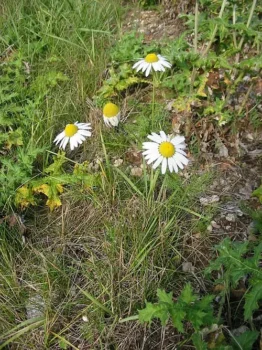
Scentless False Mayweed: A Hardy Annual for Naturalized Gardens
Meet scentless false mayweed (Tripleurospermum perforatum), a cheerful little annual that might already be growing wild in your neighborhood without you even knowing it! This unassuming member of the daisy family has quietly made itself at home across much of North America, bringing its delicate white flowers and feathery foliage to roadsides, fields, and forgotten corners of the landscape.
What Is Scentless False Mayweed?
Scentless false mayweed is an annual forb—basically a non-woody herbaceous plant that completes its life cycle in one growing season. True to its name, this plant lacks the strong scent that characterizes many of its daisy family relatives. The false mayweed part of its name hints at its resemblance to true mayweeds, though it’s quite harmless and well-behaved in the garden.
You might also encounter this plant under several scientific synonyms, including Matricaria inodora and Tripleurospermum inodorum, which can make plant identification a bit confusing for gardeners consulting different field guides.
Where Does It Come From and Where Does It Grow?
Originally hailing from Europe and western Asia, scentless false mayweed is a non-native species that has naturalized extensively across North America. It’s established populations from coast to coast, thriving in diverse climates from Alaska and northern Canada all the way down through most of the lower 48 states.
This adaptable annual has found homes in an impressive range of locations, including Alberta, Alaska, British Columbia, Colorado, Connecticut, Idaho, Illinois, Iowa, Kansas, Kentucky, Maine, Maryland, Massachusetts, Michigan, Minnesota, Missouri, Montana, Nebraska, Nevada, New Hampshire, New Jersey, New Mexico, New York, North Dakota, Pennsylvania, South Dakota, Utah, Washington, Wisconsin, Wyoming, and many Canadian provinces and territories.
- Species observed
- No observations
What Does It Look Like?
Scentless false mayweed produces classic daisy-like flowers with bright white petals surrounding cheerful yellow centers. The blooms are relatively small but appear in abundance throughout the growing season. The foliage is finely divided and feathery, giving the plant a delicate, almost lacy appearance that contrasts nicely with the crisp white flowers.
As an annual, it typically reaches modest heights and spreads, making it suitable for naturalizing in larger areas without becoming overwhelming in more formal garden settings.
Should You Grow It in Your Garden?
Here’s where things get interesting. While scentless false mayweed isn’t considered invasive or noxious, it is a non-native species. This means you’ll want to think carefully about whether it fits your gardening goals.
Reasons You Might Want to Grow It:
- Extremely low maintenance—it basically grows itself
- Attracts small pollinators and beneficial insects
- Thrives in poor soils where other plants struggle
- Provides season-long blooms with minimal care
- Hardy across USDA zones 2-8
- Perfect for naturalized or informal garden areas
Reasons You Might Skip It:
- It’s not native, so it doesn’t support local ecosystems as well as native alternatives
- Can self-seed readily and pop up in unexpected places
- May not provide the specialized habitat that native wildlife depends on
Growing Conditions and Care
If you decide to give scentless false mayweed a try, you’ll be pleased to discover it’s about as low-maintenance as plants get. This hardy annual tolerates a wide range of growing conditions, though it performs best in full sun to partial shade.
One of its most appealing characteristics is its ability to thrive in poor soils where more finicky plants would struggle. It’s also quite drought tolerant once established, making it an excellent choice for low-water gardening or areas that don’t receive regular irrigation.
Since it’s an annual that readily self-seeds, you may find it returning year after year without any effort on your part. This can be either a blessing or a minor nuisance, depending on your perspective and garden style.
Native Alternatives to Consider
If you’re drawn to the daisy-like flowers and easy-care nature of scentless false mayweed but prefer to support native plant communities, consider these alternatives:
- White heath aster (Symphyotrichum ericoides) for similar white daisy-like flowers
- Fleabane species (Erigeron spp.) for delicate white to pink blooms
- Native chamomile species that provide similar feathery foliage
- Regional wildflowers that offer white blooms and support local pollinators
The Bottom Line
Scentless false mayweed is a perfectly pleasant little annual that asks for almost nothing and delivers cheerful blooms all season long. While it’s not native, it’s also not problematic enough to avoid entirely. If you’re looking for something ultra-low maintenance for a naturalized area or don’t mind a plant that may self-seed around your garden, it could be a nice addition to your landscape.
However, if your gardening philosophy leans toward supporting native ecosystems and local wildlife, you’ll probably find more satisfaction in seeking out native alternatives that provide similar aesthetic appeal while offering greater ecological benefits. Either way, you’ll have a better understanding of this common but often overlooked member of our naturalized flora!