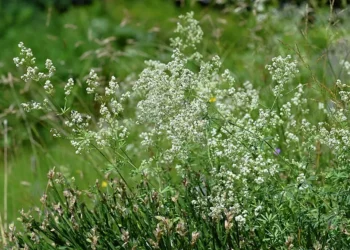
Schultes’ Bedstraw: A Little-Known Non-Native Forb
If you’ve stumbled across the name Schultes’ bedstraw (Galium schultesii) in your gardening research, you’re probably wondering what this plant is all about. This lesser-known member of the bedstraw family has found its way into California’s flora, though it remains somewhat of a mystery in the gardening world.
What is Schultes’ Bedstraw?
Schultes’ bedstraw is a perennial forb, which simply means it’s a non-woody plant that comes back year after year. Like other members of the Galium genus, it’s part of the madder family and shares the characteristic square stems and whorled leaves that make bedstraws recognizable to plant enthusiasts.
You might occasionally see this plant listed under the synonym Galium intermedium in older botanical references, though this name can be confusing since it’s been applied to different species over time.
Where Does It Grow?
Currently, Schultes’ bedstraw has been documented growing in California, where it has established itself as a non-native species that reproduces on its own in the wild. This means it’s not originally from North America but has managed to find suitable conditions and persist without human intervention.
- Species observed
- No observations
Should You Plant Schultes’ Bedstraw?
Here’s where things get a bit tricky. Since this is a non-native species with limited available information about its garden performance, invasive potential, or ecological impact, most gardeners would be better served by choosing native alternatives that we know more about.
The lack of detailed information about Schultes’ bedstraw’s growing requirements, wildlife benefits, and potential drawbacks makes it a risky choice for gardeners who want predictable results and positive environmental impact.
Native Alternatives to Consider
If you’re drawn to the idea of growing a bedstraw, consider these native options instead:
- Northern bedstraw (Galium boreale) – A native species with white flowers that attracts pollinators
- Fragrant bedstraw (Galium triflorum) – Known for its sweet-scented foliage when crushed
- Cleavers (Galium aparine) – An annual native that provides food for birds and butterflies
The Bottom Line
While Schultes’ bedstraw isn’t currently listed as invasive or noxious, the limited information available about this non-native species makes it a less-than-ideal choice for most gardens. Native bedstraws and other indigenous plants offer better-understood benefits for both gardeners and local ecosystems.
If you’re interested in supporting native wildlife and creating a sustainable garden, stick with well-researched native plants that have documented benefits for pollinators, birds, and other wildlife. Your local native plant society or extension office can help you identify the best bedstraw species for your specific region and garden conditions.