Scotch Cottonthistle: A Beautiful but Problematic Garden Guest
If you’ve ever encountered a towering, silvery plant with dramatic purple thistle flowers along roadsides or in abandoned lots, you’ve likely met Scotch cottonthistle (Onopordum acanthium). While this European native certainly makes a statement with its architectural presence, there are some important things every gardener should know before considering it for their landscape.
What Is Scotch Cottonthistle?
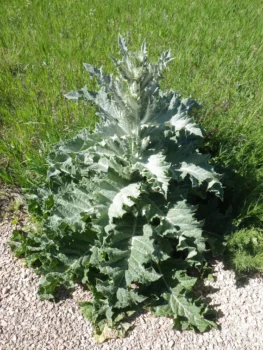
Scotch cottonthistle is a biennial forb—meaning it’s an herbaceous plant that completes its life cycle over two years. In its first year, it forms a rosette of large, woolly leaves close to the ground. Come year two, it sends up an impressive flowering stem that can reach 6 to 10 feet tall, topped with purple thistle-like flowers that bloom from summer into fall.
The entire plant has a distinctive silvery-white, woolly appearance thanks to dense hairs covering the stems and leaves. These same stems are lined with spiny wings that give the plant its species name acanthium, meaning thorny.
Where Does It Grow?
Originally from Europe and western Asia (particularly Scotland, hence the common name), Scotch cottonthistle has spread across much of North America. You can find it established in states from coast to coast, including Alabama, Arizona, California, Colorado, Connecticut, Idaho, Montana, Oregon, Texas, Washington, and many others. It’s also present in several Canadian provinces.
- Species observed
- No observations
The Invasive Reality
Here’s where we need to have an honest conversation about this plant. While Scotch cottonthistle might catch your eye with its dramatic appearance, it’s classified as potentially invasive and is actually prohibited in Connecticut. This non-native species has a troubling habit of establishing itself in the wild and displacing native plants that our local wildlife depends on.
The plant produces numerous seeds (up to 40,000 per plant!) that disperse easily on the wind, allowing it to spread rapidly and establish new populations. Once established, it can be difficult to control and tends to dominate the areas where it grows.
Growing Conditions and Care
If you’re curious about what makes this plant so successful (perhaps too successful), here are its preferred conditions:
- Full sun exposure
- Well-drained soils, though it’s not particularly picky
- USDA hardiness zones 3-9
- Drought tolerant once established
- Tolerates poor, disturbed soils
The plant requires minimal care, which unfortunately contributes to its invasive potential. It self-seeds readily and can quickly colonize disturbed areas, roadsides, and abandoned lots.
Wildlife and Pollinator Considerations
While Scotch cottonthistle does attract pollinators like bees and butterflies to its purple flower heads, this benefit doesn’t outweigh the problems it creates for native ecosystems. Native plants will always provide better, more specialized resources for local wildlife.
Better Native Alternatives
Instead of planting Scotch cottonthistle, consider these native alternatives that offer similar dramatic appeal without the invasive concerns:
- Wild bergamot (Monarda fistulosa) – Provides purple flowers and attracts numerous pollinators
- New England aster (Symphyotrichum novae-angliae) – Offers late-season purple blooms and feeds native insects
- Purple coneflower (Echinacea purpurea) – Features purple petals with spiky centers, beloved by goldfinches
- Nodding onion (Allium cernuum) – Produces purple flower clusters and supports native bees
The Bottom Line
While Scotch cottonthistle certainly has visual appeal with its towering stature and silvery appearance, responsible gardeners should avoid planting it due to its invasive nature. Instead, choose native alternatives that provide similar aesthetic benefits while supporting local ecosystems and wildlife. Remember, the most beautiful garden is one that works in harmony with the natural world around it.
If you already have Scotch cottonthistle on your property, consider removing it before it sets seed and replacing it with native alternatives that will serve both your landscape goals and the environment better.