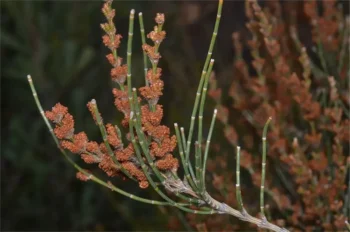
Scrub She-Oak: A Hardy Australian Native for Warm Climate Gardens
If you’re looking for a low-maintenance, drought-tolerant plant that brings a touch of the Australian bush to your garden, meet the scrub she-oak (Allocasuarina paludosa). This distinctive native isn’t your typical garden showstopper, but it’s got plenty of charm and practical benefits that make it worth considering for the right landscape.
What is Scrub She-Oak?
Despite its common name, scrub she-oak isn’t actually an oak at all! This interesting plant belongs to the Casuarina family and is native to eastern Australia, particularly New South Wales and Queensland. You might also see it listed under its old botanical name, Casuarina paludosa, but Allocasuarina paludosa is the current accepted name.
What makes this plant unique is its needle-like foliage, which are actually modified stems called cladodes rather than true leaves. These give the plant a delicate, almost pine-like appearance that sways gracefully in the breeze.
Why Consider Planting Scrub She-Oak?
Here are some compelling reasons why this Australian native might deserve a spot in your landscape:
- Drought tolerance: Once established, scrub she-oak can handle dry conditions like a champ
- Low maintenance: This is a plant it and forget it kind of shrub
- Erosion control: Great for slopes and areas where you need to stabilize soil
- Screening potential: Can be used to create natural privacy screens
- Windbreak qualities: Helps protect other plants from harsh winds
- Unique texture: Adds an interesting architectural element to native plant gardens
Garden Design and Landscape Use
Scrub she-oak works best in naturalistic, native plant gardens where its informal growth habit can shine. It’s particularly well-suited for:
- Australian native plant gardens
- Coastal landscapes (it tolerates salt spray reasonably well)
- Xerophytic (dry) gardens
- Large-scale naturalistic plantings
- Erosion-prone areas that need stabilizing
This isn’t the plant for formal, manicured landscapes or small urban gardens where space is at a premium. It’s more of a let it do its thing kind of plant that looks best when given room to spread naturally.
Growing Conditions and Care
The good news is that scrub she-oak is pretty easygoing once you understand its basic needs:
Climate: This plant is suited for USDA hardiness zones 9-11. It’s not frost-tolerant, so if you’re in a cooler climate, this one’s not for you.
Soil: Well-drained soil is absolutely essential. Scrub she-oak can’t stand wet feet and will quickly succumb to root rot in poorly drained conditions. Sandy or gravelly soils work well.
Sun exposure: Full sun to partial shade works best, though it tends to be more compact in full sun.
Water: Drought-tolerant once established, but appreciates occasional deep watering during very dry spells.
Planting and Care Tips
Getting your scrub she-oak off to a good start is pretty straightforward:
- Planting: Choose a spot with excellent drainage and dig a hole twice as wide as the root ball
- Spacing: Give it plenty of room to spread – these plants don’t like to be crowded
- Watering: Water regularly for the first year to help establish the root system, then back off
- Fertilizing: Go easy on the fertilizer – these plants are adapted to nutrient-poor soils
- Pruning: Light pruning to shape is fine, but avoid heavy pruning which can damage the plant
Wildlife and Ecological Benefits
While scrub she-oak is wind-pollinated (so it won’t attract bees and butterflies like flowering plants), it does provide habitat and food for various wildlife species. Birds may use it for nesting, and the small cone-like fruits provide food for some native animals in its natural range.
Is Scrub She-Oak Right for Your Garden?
This plant is perfect for you if you’re looking for a low-maintenance, drought-tolerant addition to a native plant garden in a warm climate. It’s ideal for gardeners who appreciate subtle beauty and want to create habitat for local wildlife.
However, you might want to look elsewhere if you’re gardening in zones 8 or cooler, have heavy clay soil with poor drainage, or are looking for a compact plant for a small space.
For those in appropriate climates, scrub she-oak offers a unique way to bring a piece of the Australian landscape to your own backyard – just make sure you’ve got the drainage sorted first!