Sea Campion: A Charming Coastal Perennial for Rock Gardens
If you’ve ever wandered along European coastlines, you might have spotted delicate white flowers dancing in the salty breeze, seemingly thriving where other plants struggle. Meet sea campion (Silene uniflora), a tough little perennial that brings coastal charm to gardens far from the shore. While this isn’t a North American native, it’s earned a spot in many gardeners’ hearts for its resilience and understated beauty.
What is Sea Campion?
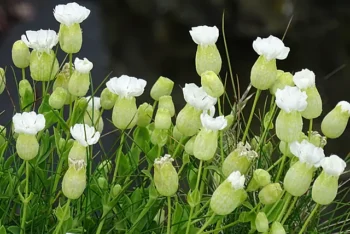
Sea campion is a low-growing perennial that forms neat cushions of blue-green foliage topped with pristine white flowers. Each bloom features five deeply notched petals that give them an almost star-like appearance, creating a delightful contrast against the silvery leaves. You might also see this plant listed under its former scientific name, Silene maritima, in older gardening resources.
Where Does Sea Campion Come From?
This hardy little plant calls the Atlantic coasts of Europe home, thriving naturally along the rocky shores and cliffs of Britain, Ireland, and western European coastlines. It’s perfectly adapted to life by the sea, where it faces constant salt spray, strong winds, and poor, sandy soils.
Why Consider Sea Campion for Your Garden?
Sea campion offers several appealing qualities for the right garden setting:
- Drought tolerance: Once established, it rarely needs watering
- Low maintenance: Requires minimal care and rarely suffers from pests or diseases
- Long blooming period: Flowers appear from late spring through summer
- Pollinator friendly: Attracts moths, butterflies, and bees to its nectar-rich blooms
- Cold hardy: Thrives in USDA zones 3-8
Perfect Garden Settings
Sea campion isn’t a plant for every garden, but it shines in specific situations:
- Rock gardens: Its cushion-forming habit looks natural among stones
- Coastal gardens: Handles salt spray and sandy conditions like a champ
- Alpine or Mediterranean-style gardens: Fits perfectly with other drought-tolerant plants
- Containers: Works well in pots, especially when drainage is excellent
Growing Conditions and Care
The secret to success with sea campion lies in mimicking its natural coastal habitat:
- Soil: Well-draining, sandy or gravelly soil is essential – it hates wet feet
- Light: Full sun produces the most flowers, though it tolerates partial shade
- Water: Drought-tolerant once established; water sparingly
- Fertilizer: Actually prefers poor soil – avoid rich, fertile conditions
Planting and Maintenance Tips
Getting sea campion established is straightforward if you remember its coastal origins:
- Plant in spring after the last frost
- Ensure excellent drainage – consider raised beds or containers if your soil is heavy
- Space plants about 12 inches apart
- Water regularly the first season, then reduce to occasional deep watering
- Deadhead spent flowers to encourage more blooms
- Divide clumps every 3-4 years if they become overcrowded
A Word About Native Alternatives
While sea campion is a lovely plant that’s not considered invasive, North American gardeners might want to consider native alternatives that provide similar benefits to local ecosystems. Wild columbine, coral bells, or native sedums can offer comparable charm while supporting regional wildlife and pollinators more effectively.
The Bottom Line
Sea campion is a delightful choice for gardeners dealing with challenging conditions like poor soil, drought, or coastal exposure. Its modest beauty and bulletproof nature make it a reliable performer in rock gardens and Mediterranean-style landscapes. Just remember that this European native, while not problematic, won’t provide the same ecological benefits as plants that evolved alongside your local wildlife. Whether you choose sea campion or explore native alternatives, you’re sure to find a plant that brings both beauty and resilience to your garden.