Sea Fig: A Colorful Coastal Groundcover with a South American Twist
If you’re looking for a tough-as-nails groundcover that laughs in the face of salt spray and drought, sea fig might just catch your eye. This succulent carpet-former has made quite a journey from its native Chilean shores to grace gardens along the American West Coast.
What Exactly Is Sea Fig?
Sea fig (Carpobrotus chilensis) is a perennial succulent that belongs to the ice plant family. Originally from Chile, this hardy groundcover has established itself in California and Oregon, where it thrives in coastal conditions that would stress out many other plants. You might also see it listed under its scientific synonyms, including Mesembryanthemum chilense.
As a non-native species that reproduces spontaneously in the wild, sea fig has proven its ability to adapt to new environments. It’s classified as an introduced species that persists without human intervention in the lower 48 states.
Where You’ll Find It Growing
Currently, sea fig has made itself at home in California and Oregon, where coastal conditions mirror its native Chilean habitat.
- Species observed
- No observations
The Good, The Beautiful, and The Practical
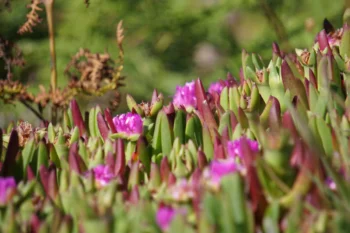
Sea fig brings several appealing qualities to the garden table. Its thick, triangular succulent leaves create a dense, carpet-like mat that’s both visually interesting and functionally useful for erosion control. The real showstoppers are its large, daisy-like flowers that bloom in vibrant shades of yellow, pink, or purple – a cheerful sight that can brighten up even the most challenging coastal landscape.
From a practical standpoint, this plant excels at:
- Preventing soil erosion on slopes
- Tolerating salt spray and coastal winds
- Requiring minimal water once established
- Attracting bees and other pollinators with its showy blooms
Where Sea Fig Shines in Your Landscape
This groundcover is particularly well-suited for:
- Coastal gardens where salt tolerance is crucial
- Xeriscapes and drought-tolerant landscapes
- Rock gardens and Mediterranean-style designs
- Slopes and embankments needing erosion control
Growing Conditions and Care
Sea fig thrives in USDA hardiness zones 9-11, as it’s quite sensitive to frost. Here’s what this South American native prefers:
- Sunlight: Full sun for best flowering and growth
- Soil: Well-draining sandy or rocky soils – soggy conditions are its kryptonite
- Water: Drought tolerant once established, though occasional deep watering helps
- Wetland preference: Usually found in non-wetland areas, though can occasionally tolerate some moisture
Planting and Propagation Tips
Growing sea fig is refreshingly straightforward. The plant propagates easily from cuttings – simply take a piece of stem, let it callus over for a day or two, then plant it in well-draining soil. It’s one of those set it and forget it plants that rewards minimal fussing with robust growth.
Keep in mind that sea fig can spread quite aggressively once happy, so give it room to roam or be prepared to keep it in check.
Should You Plant Sea Fig?
While sea fig isn’t native to North American ecosystems, it’s not currently listed as invasive or noxious either. If you’re drawn to its colorful blooms and bulletproof nature, it can certainly serve a purpose in challenging coastal locations.
However, if you’re passionate about supporting native ecosystems, consider these fantastic native alternatives that offer similar benefits:
- Native sedums for succulent groundcover
- Beach strawberry (Fragaria chiloensis) for coastal erosion control
- Native bunch grasses for slope stabilization
The choice ultimately depends on your gardening goals and values. Sea fig offers reliable performance in tough conditions, but native plants provide irreplaceable benefits to local wildlife and ecosystem health.
The Bottom Line
Sea fig is undeniably tough, colorful, and useful for challenging coastal conditions. While it’s not a native species, it’s found its niche in West Coast gardens where few other plants dare to tread. Whether you choose to welcome this Chilean immigrant into your garden or opt for native alternatives, the key is making an informed decision that aligns with your landscape goals and environmental values.