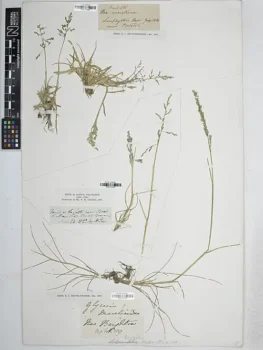
Seaside Alkaligrass: The Unsung Hero of Salty Soils
If you’ve ever wondered what tough little grass manages to thrive where salt spray meets soggy soil, meet seaside alkaligrass (Puccinellia maritima). This perennial grass might not win any beauty contests, but it’s absolutely spectacular at doing what most plants simply can’t: living happily in salty, waterlogged conditions that would make other plants throw in the towel.
What Exactly Is Seaside Alkaligrass?
Seaside alkaligrass is a hardy perennial grass that forms dense, low-growing mats along coastlines and in salt marshes. You might also see it listed under its scientific synonyms Glyceria maritima or Puccinellia americana in older references. This resilient little grass belongs to the larger family of grasses and grass-like plants, and it’s built specifically for life in the salt zone.
Where You’ll Find It Growing
Originally from coastal Europe and western Asia, seaside alkaligrass has made itself at home in North America. You can find it established in several states and provinces including New Brunswick, Nova Scotia, Prince Edward Island, Quebec, Maine, Massachusetts, New Hampshire, Connecticut, Rhode Island, New York, New Jersey, Pennsylvania, Delaware, California, and Washington. It’s considered non-native in Canada and Greenland, where it reproduces on its own without human help.
- Species observed
- No observations
The Appeal (Or Lack Thereof)
Let’s be honest – seaside alkaligrass isn’t going to make your neighbors stop and stare in admiration. This fine-textured grass grows low to the ground, forming dense mats that are more functional than beautiful. Think of it as the reliable work boots of the plant world rather than the fancy dress shoes.
Why You Might Want to Grow It
Despite its humble appearance, seaside alkaligrass has some impressive superpowers that make it incredibly valuable in specific situations:
- Salt tolerance champion: This grass laughs in the face of salt spray and saline soils that kill other plants
- Erosion control expert: Those dense mats help stabilize soil in challenging coastal conditions
- Flood survivor: As an obligate wetland plant, it actually prefers wet, saturated soils
- Low maintenance: Once established, it pretty much takes care of itself
Perfect Growing Conditions
Seaside alkaligrass is quite specific about what it wants, but if you can provide these conditions, it’ll be incredibly happy:
- Sunlight: Full sun is best
- Soil: Wet to saturated soils, high salt tolerance essential
- Water: Loves consistently moist to waterlogged conditions
- Climate: Hardy in USDA zones 4-9
- Special needs: Tolerates regular flooding and salt spray
Where It Fits in Your Landscape
This isn’t a grass for your typical suburban lawn! Seaside alkaligrass shines in very specific landscape situations:
- Coastal properties dealing with salt spray
- Restoration projects in salt marsh areas
- Areas with saline soil conditions
- Erosion control in wet, salty environments
- Rain gardens in coastal areas (with salt considerations)
Planting and Care Tips
Growing seaside alkaligrass is refreshingly straightforward once you understand its needs:
- Plant in spring when soil temperatures warm up
- Ensure the planting area stays consistently moist to wet
- Don’t worry about fertilizing – this grass is adapted to nutrient-poor conditions
- Allow it to establish naturally; it spreads to form dense colonies
- Minimal care needed once established in appropriate conditions
Wildlife and Pollinator Considerations
As a wind-pollinated grass, seaside alkaligrass doesn’t offer much direct benefit to pollinators like bees and butterflies. However, it does provide habitat structure in salt marsh ecosystems and can offer some value to birds and other wildlife in coastal environments.
Should You Plant It?
The answer depends entirely on your specific situation. If you’re dealing with salty, wet conditions where nothing else will grow, seaside alkaligrass could be a lifesaver. However, if you’re looking for a more ornamental option or don’t have these extreme conditions, you might want to consider native alternatives that are better suited to your local ecosystem.
For most gardeners, exploring native salt-tolerant grasses and sedges from your region will provide better ecological benefits and often more attractive options. But for those challenging spots where salt meets soggy soil and nothing else will survive, seaside alkaligrass proves that sometimes the most unassuming plants are exactly what you need.