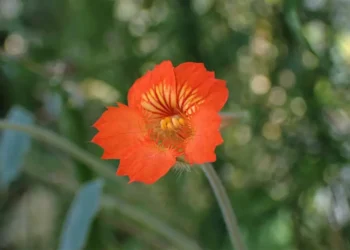
Shield Nasturtium: The Mystery Plant That May Not Exist
If you’ve come across the name shield nasturtium or its botanical name Tropaeolum peltophorum in your gardening research, you might be scratching your head trying to find more information about it. Well, you’re not alone, and there’s a good reason for your confusion.
The Case of the Missing Nasturtium
Here’s where things get interesting (and a bit puzzling): Tropaeolum peltophorum appears to be either an extremely rare, poorly documented plant, or possibly a botanical name that doesn’t correspond to a currently recognized species. Despite extensive searching through botanical databases and horticultural literature, reliable information about this specific plant is virtually non-existent.
The Tropaeolum genus is well-known and beloved by gardeners worldwide, containing popular species like Tropaeolum majus (garden nasturtium) and Tropaeolum speciosum (flame nasturtium). However, peltophorum as a species within this genus doesn’t appear in major botanical references.
What This Means for Gardeners
If you’re looking to add a shield nasturtium to your garden, you might want to consider these possibilities:
- The name may be a misidentification or outdated synonym
- It could be a very localized or rare species with limited documentation
- There may be confusion with another plant entirely
Better Alternatives: Proven Nasturtium Species
Instead of searching for this elusive shield nasturtium, consider these well-documented and readily available Tropaeolum species that will definitely thrive in your garden:
- Garden Nasturtium (Tropaeolum majus): The classic climbing or trailing nasturtium with edible flowers
- Canary Creeper (Tropaeolum peregrinum): A vigorous climber with bright yellow, fringed flowers
- Flame Nasturtium (Tropaeolum speciosum): A perennial climber with brilliant red flowers
What to Do If You Have This Plant
If you believe you have a plant labeled as Tropaeolum peltophorum or shield nasturtium, consider:
- Taking clear photos of the flowers, leaves, and growth habit
- Consulting with local botanical experts or extension services
- Submitting specimens to herbaria for proper identification
Your mystery plant might turn out to be a known species with an incorrect label, or you could potentially have something quite rare and interesting!
The Bottom Line
While the search for Tropaeolum peltophorum might lead to a botanical dead end, it’s a great reminder that plant names can be tricky, and not every name you encounter will lead to a real, available plant. When in doubt, stick with well-documented species from reputable nurseries, and don’t be afraid to ask questions when something seems too mysterious to be true.
Happy gardening, and may your nasturtiums be both beautiful and properly identified!