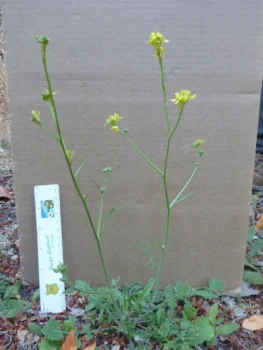
Shortpod Mustard: A Mediterranean Wanderer in American Gardens
If you’ve ever wondered about that tall, yellow-flowered plant sprouting up in vacant lots and along roadsides, you might be looking at shortpod mustard (Hirschfeldia incana). This Mediterranean native has made itself quite at home in parts of the American West, though it’s definitely not your typical garden center find.
What Exactly Is Shortpod Mustard?
Shortpod mustard, scientifically known as Hirschfeldia incana, is a member of the mustard family that can live as an annual, biennial, or perennial depending on conditions. As a forb (a non-woody flowering plant), it lacks the substantial woody growth you’d see in shrubs or trees, instead producing soft stems and leaves that die back seasonally.
You might also encounter this plant under some of its scientific synonyms, including Brassica geniculata, Brassica incana, or Sinapis incana, though these older names are less commonly used today.
Where You’ll Find It Growing
Originally from the Mediterranean region, North Africa, and parts of Asia, shortpod mustard has established itself as a non-native species in several western U.S. states. Currently, you can find it growing wild in California, Hawaii, Nevada, and Oregon, where it reproduces on its own without human assistance.
- Species observed
- No observations
Should You Grow Shortpod Mustard?
Here’s where things get interesting. While shortpod mustard isn’t considered invasive or particularly harmful, it’s also not typically grown as an ornamental plant. Here are some factors to consider:
Reasons You Might Want It:
- Extremely low-maintenance and drought-tolerant
- Can grow 3-6 feet tall, providing height in wildflower areas
- Small yellow flowers may attract some pollinators
- Self-sows readily if you want a naturalized look
Reasons You Might Skip It:
- Has a somewhat weedy, unkempt appearance
- Not native to North America
- Limited wildlife and pollinator benefits compared to native alternatives
- Can spread aggressively through self-seeding
Growing Conditions and Care
If you do decide to grow shortpod mustard, you’ll find it refreshingly easy to please. This adaptable plant thrives in USDA hardiness zones 8-11 and isn’t particularly fussy about soil conditions. It prefers full sun and, once established, can handle drought conditions quite well.
Planting Tips:
- Direct sow seeds in spring or fall
- Barely cover seeds with soil, as they need light to germinate
- Space plants about 12-18 inches apart
- Water regularly until established, then reduce watering
Ongoing Care:
- Minimal care required once established
- May self-seed prolifically if allowed to go to seed
- Remove spent flowers if you want to prevent spreading
- No special fertilization needed
Native Alternatives to Consider
Since shortpod mustard isn’t native to North America, you might want to consider some beautiful native alternatives that provide similar benefits but support local ecosystems better:
- Wild bergamot (Monarda species) for tall, colorful flowers
- Native sunflowers (Helianthus species) for height and pollinator appeal
- Goldenrod (Solidago species) for late-season yellow blooms
- Native mustards like field mustard (Brassica rapa) where appropriate
The Bottom Line
Shortpod mustard is one of those plants that falls into the interesting but not essential category for most gardeners. While it’s not harmful to grow and can fill space in low-maintenance areas, native alternatives will generally provide more benefits to local wildlife and pollinators. If you’re drawn to its easy-care nature and naturalized appearance, just be prepared for its enthusiastic self-seeding habits!