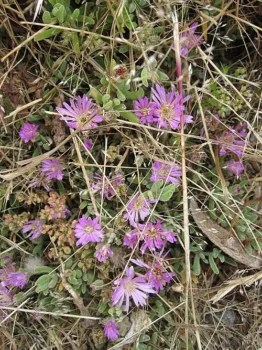
Showy Dewflower: A Colorful Ground Cover for Water-Wise Gardens
If you’re looking for a splash of vibrant color in your drought-tolerant landscape, the showy dewflower (Drosanthemum floribundum) might catch your eye. This perennial succulent creates carpets of bright pink to purple daisy-like blooms that can transform even the driest garden spots into eye-catching displays.
What Is Showy Dewflower?
Showy dewflower is a low-growing perennial herb with succulent-like characteristics. Despite its delicate-sounding name, this tough little plant is built to survive in challenging conditions. As a member of the ice plant family, it produces masses of small, colorful flowers that open in sunny conditions and close during cloudy weather or at night.
You might also see this plant referenced by its botanical synonym, Mesembryanthemum floribundum, in older gardening references.
Native Status and Geographic Distribution
Here’s something important to know upfront: showy dewflower isn’t actually native to North America. This South African native has naturalized in California, where it grows and reproduces on its own in the wild. While it’s established itself successfully in the Golden State’s Mediterranean climate, it remains a non-native species.
- Species observed
- No observations
Should You Plant Showy Dewflower in Your Garden?
The answer depends on your gardening goals and location. Here are some considerations:
Reasons You Might Love It:
- Incredible drought tolerance once established
- Produces abundant, showy blooms in bright colors
- Low maintenance requirements
- Excellent ground cover for difficult spots
- Attracts bees and small pollinators during blooming season
- Thrives in coastal and Mediterranean climates
Potential Drawbacks:
- Not native to North America
- Can spread readily and may self-seed
- Limited cold tolerance (USDA zones 9-11 only)
- Doesn’t provide the same ecological benefits as native alternatives
Growing Conditions and Care
If you decide to grow showy dewflower, you’ll find it refreshingly easy to please. This plant thrives in conditions that would stress many other flowering perennials.
Ideal Growing Conditions:
- Sunlight: Full sun for best flowering
- Soil: Well-draining soil is essential; tolerates poor, sandy, or rocky soils
- Water: Drought tolerant once established; actually prefers dry conditions
- Climate: Best in USDA hardiness zones 9-11
Planting and Care Tips
Getting showy dewflower established in your garden is straightforward:
- Plant in spring after the last frost date
- Space plants according to how quickly you want coverage
- Water regularly the first few weeks, then reduce to occasional deep watering
- Avoid overwatering, which can lead to root rot
- No fertilizer needed in most soils
- Deadhead spent blooms to encourage continued flowering
Garden Design Ideas
Showy dewflower works beautifully in several landscape situations:
- Rock gardens and xeriscapes
- Coastal gardens where salt tolerance is needed
- Slopes and banks for erosion control
- Mediterranean-style landscapes
- Container gardens in hot, sunny locations
Consider Native Alternatives
While showy dewflower can be a striking addition to water-wise gardens, consider exploring native ground covers that provide similar aesthetic appeal while supporting local ecosystems. Depending on your region, native alternatives might include local sedums, native buckwheats, or regional wildflowers that offer comparable drought tolerance and colorful blooms.
The Bottom Line
Showy dewflower offers reliable color and easy care for gardeners in warm, dry climates. While it’s not native to North America, it can be a practical choice for challenging garden spots where few other flowering plants will thrive. Just be mindful of its spreading nature and consider balancing non-native choices with plenty of native plants to support local wildlife and pollinators.
If you’re gardening in zones 9-11 and need a tough, colorful ground cover for a sunny, well-draining spot, showy dewflower might be worth considering – just remember to explore native options first!