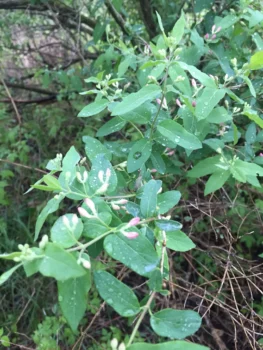
Showy Fly Honeysuckle: A Beautiful But Problematic Garden Plant
If you’ve been tempted by the delicate pink and white flowers of showy fly honeysuckle, you’re not alone. This attractive shrub has caught many gardeners’ eyes with its graceful arching branches and sweet-scented blooms. But before you add Lonicera ×bella to your shopping list, there’s something important you need to know about this seemingly innocent plant.
What Is Showy Fly Honeysuckle?
Showy fly honeysuckle is a perennial shrub that typically grows 4 to 13 feet tall with multiple stems arising from the base. As a hybrid between two Asian honeysuckle species, this non-native plant has found its way into gardens across North America. The plant produces tubular flowers ranging from pink to white in late spring, followed by bright red berries that many find quite appealing.
Where Does It Grow?
This adaptable shrub has spread throughout much of the northern United States and southern Canada, establishing populations in states from Maine to Washington and provinces including Ontario, Quebec, New Brunswick, and Saskatchewan. Its ability to thrive in various conditions has contributed to its widespread distribution.
- Species observed
- No observations
The Problem: It’s an Invasive Species
Here’s where things get complicated. While showy fly honeysuckle might look lovely in your garden, it’s classified as invasive in several states:
- Alabama: Category 2 invasive status
- Connecticut: Invasive and prohibited
- Missouri: Invasive species
- New Hampshire: Prohibited
- Wisconsin: Restricted species
This means that in many areas, planting showy fly honeysuckle isn’t just discouraged—it may actually be illegal. The plant reproduces spontaneously in the wild and can outcompete native species, disrupting local ecosystems.
Growing Conditions and Hardiness
If you’re wondering why this plant has become so widespread, it’s partly due to its remarkable adaptability. Showy fly honeysuckle tolerates a wide range of growing conditions and is hardy in USDA zones 3-8. Its wetland status varies by region but is generally classified as facultative upland, meaning it usually grows in non-wetland areas but can adapt to wetter conditions when necessary.
Why You Should Think Twice
While the flowers do attract some pollinators and the berries provide food for wildlife, native alternatives offer much better ecological benefits without the risk of environmental damage. The aggressive nature of this plant means it can quickly take over natural areas, crowding out the native plants that local wildlife depends on.
Better Native Alternatives
Instead of planting showy fly honeysuckle, consider these native options that provide similar aesthetic appeal without the ecological concerns:
- American elderberry (Sambucus canadensis) – offers clusters of white flowers and dark berries
- Spicebush (Lindera benzoin) – provides early spring blooms and excellent fall color
- Native azaleas (Rhododendron species) – deliver spectacular spring flowers
- Serviceberry (Amelanchier species) – features white flowers and edible berries
The Bottom Line
As tempting as it might be to plant showy fly honeysuckle for its attractive flowers and low-maintenance nature, the potential environmental impact simply isn’t worth it. With so many beautiful native alternatives available, you can create an equally stunning landscape while supporting local ecosystems and staying on the right side of invasive species regulations.
Remember, the best gardens work in harmony with their local environment rather than against it. By choosing native plants over invasive species like showy fly honeysuckle, you’re not just creating a beautiful space—you’re contributing to the health of your local ecosystem for generations to come.