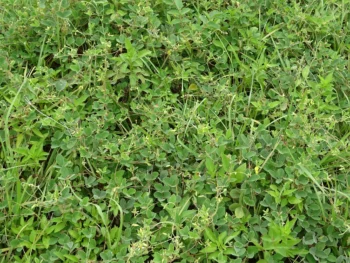
Showy Pigeonpea: An Uncommon Non-Native Shrub Worth Knowing About
If you’ve stumbled across the name showy pigeonpea in your gardening research, you might be wondering what exactly this plant is and whether it deserves a spot in your landscape. Cajanus scarabaeoides, as it’s known scientifically, is one of those plants that flies under the radar—and for good reason. This uncommon shrub has a rather limited presence in North American gardens, but understanding what it is can help you make informed decisions about your planting choices.
What is Showy Pigeonpea?
Showy pigeonpea is a perennial shrub that belongs to the legume family. True to its shrubby nature, it’s a multi-stemmed woody plant that typically stays under 13-16 feet tall, though it usually remains much smaller in most growing conditions. Like other members of its family, it produces the characteristic pea-like flowers that legumes are known for.
You might also encounter this plant listed under its synonyms: Atylosia scarabaeoides or Cantharospermum scarabaeoides—botanists do love their name changes!
Native Status and Distribution
Here’s where things get interesting (and a bit concerning from a native gardening perspective): showy pigeonpea is not native to North America. It’s an introduced species that has managed to establish itself and reproduce without human help in the wild. Currently, it’s only documented as growing in Maryland, making it quite a rare sight in American landscapes.
- Species observed
- No observations
Should You Plant Showy Pigeonpea?
This is where we need to have an honest conversation. As native gardening enthusiasts, we generally encourage choosing plants that naturally belong in our ecosystems. Since showy pigeonpea is non-native and has shown the ability to establish itself in the wild, there are some considerations to keep in mind:
- Its ecological impact is largely unknown
- It may not provide the same benefits to local wildlife as native alternatives
- Native plants are generally better adapted to local conditions
Native Alternatives to Consider
Instead of showy pigeonpea, consider these native legumes that can provide similar benefits:
- Wild senna (Senna hebecarpa) – a beautiful native shrub with yellow flowers
- American groundnut (Apios americana) – a native climbing legume
- Wild lupine (Lupinus perennis) – stunning purple flower spikes
- Partridge pea (Chamaecrista fasciculata) – delicate yellow flowers and interesting seed pods
If You Encounter Showy Pigeonpea
If you come across this plant in the wild or inherited it in your garden, here’s what you should know about its care requirements (though specific information is quite limited):
- It likely prefers well-drained soil, as most legumes do
- Being a member of the pea family, it probably fixes nitrogen in the soil
- It may attract some pollinators, though native plants would be more beneficial
- Its cold hardiness is unclear, which might explain its limited distribution
The Bottom Line
Showy pigeonpea is one of those plants that’s more of a botanical curiosity than a garden must-have. While it’s not currently listed as invasive, its non-native status and ability to naturalize give us pause. If you’re passionate about supporting local ecosystems (and we hope you are!), your garden space is better used for native plants that will truly benefit local wildlife and pollinators.
That said, if you’re conducting research or have a special interest in legume diversity, understanding plants like showy pigeonpea helps us appreciate the complex world of introduced species and their place in our changing landscapes. Just remember—when in doubt, go native!