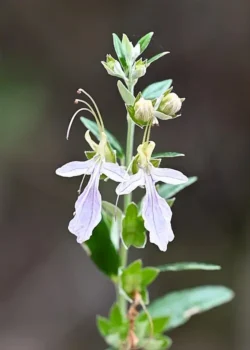
Shrubby Germander: A Mediterranean Beauty for Drought-Tolerant Gardens
Looking for a tough, beautiful shrub that laughs in the face of drought? Meet shrubby germander (Teucrium fruticans), a Mediterranean charmer that’s been winning over gardeners with its silvery foliage and delicate purple-blue flowers. This hardy perennial shrub might just be the low-maintenance solution your landscape has been craving.
What Is Shrubby Germander?
Shrubby germander is a multi-stemmed woody perennial that typically grows 4-5 feet tall and wide, though it can occasionally reach greater heights under ideal conditions. This aromatic shrub belongs to the mint family and brings that signature Mediterranean flair to any garden setting.
Where Does It Come From?
Originally hailing from the Mediterranean region, including Spain, France, Italy, and North Africa, shrubby germander has made its way to California, where it has naturalized and reproduces on its own in the wild. While it’s not native to North America, it has found a comfortable home in similar climates.
- Species observed
- No observations
The Visual Appeal
What makes shrubby germander such a standout? It’s all about that stunning silver-gray foliage that seems to shimmer in the sunlight. The small, oval leaves are covered in fine hairs that give them their distinctive silvery appearance. Come spring and summer, the plant produces clusters of small, tubular flowers in shades of blue to purple that create a lovely contrast against the pale foliage.
Garden Role and Design Uses
Shrubby germander is incredibly versatile in the landscape:
- Makes an excellent informal hedge or border plant
- Perfect for Mediterranean-style gardens
- Works beautifully in drought-tolerant landscapes
- Ideal for coastal gardens where salt tolerance is needed
- Great as a specimen plant or in mass plantings
Growing Conditions and Care
Here’s where shrubby germander really shines – it’s remarkably easy to grow! This plant thrives in USDA hardiness zones 8-10 and prefers:
- Full sun exposure (at least 6 hours daily)
- Well-draining soil (it absolutely hates wet feet)
- Once established, it’s extremely drought tolerant
- Minimal water requirements after the first year
Planting and Care Tips
Getting started with shrubby germander is refreshingly straightforward:
- Plant in spring or fall when temperatures are moderate
- Ensure excellent drainage – amend heavy clay soils with sand or gravel
- Water regularly the first year to establish roots, then reduce watering
- Prune lightly after flowering to maintain shape and encourage bushiness
- No fertilizer needed – this plant actually prefers lean soils
Benefits for Pollinators
While shrubby germander may not be native, it does offer some benefits to local wildlife. The small flowers attract bees and butterflies during the blooming season, providing nectar when many other plants might be dormant due to heat or drought.
Should You Plant It?
Shrubby germander can be a great choice if you’re looking for a low-maintenance, drought-tolerant shrub for Mediterranean or xeriscape gardens. However, since it’s not native to North America, consider these alternatives that provide similar benefits while supporting local ecosystems:
- Native sages (Salvia species) for similar aromatic, drought-tolerant qualities
- Ceanothus varieties for blue flowers and wildlife benefits
- Native buckwheats (Eriogonum species) for drought tolerance and pollinator support
The Bottom Line
Shrubby germander offers undeniable beauty and practically zero maintenance once established. While it’s not invasive, choosing native alternatives when possible helps support local wildlife and maintains regional ecological balance. If you do decide to grow shrubby germander, you’ll be rewarded with a gorgeous, resilient shrub that brings Mediterranean elegance to your drought-tolerant garden.