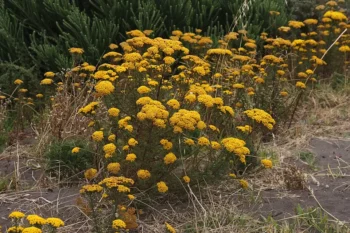
Shrubby Mayweed: What You Need to Know About This Non-Native Wildflower
If you’ve spotted a small, daisy-like wildflower with feathery leaves growing in disturbed areas around Oregon, you might have encountered shrubby mayweed (Oncosiphon suffruticosum). This unassuming little plant has quite a story to tell, and understanding it can help you make informed decisions about your garden and local ecosystem.
Meet the Shrubby Mayweed
Shrubby mayweed goes by the scientific name Oncosiphon suffruticosum, though you might also see it listed under its synonym Matricaria suffruticosa in older references. Despite its name suggesting a shrubby nature, this plant is actually an annual forb—a non-woody flowering plant that completes its entire life cycle in one growing season.
Originally hailing from South Africa, this Mediterranean climate native has found its way to Oregon, where it’s established itself in the wild. The plant reproduces on its own without human intervention and has shown it can persist in our Pacific Northwest environment.
Where You’ll Find It
Currently, shrubby mayweed has been documented growing in Oregon within the lower 48 states. It tends to pop up in disturbed areas, waste places, and locations where the soil has been turned over or stressed.
- Species observed
- No observations
What Does It Look Like?
This modest wildflower produces small, white daisy-like blooms with bright yellow centers that might remind you of chamomile flowers. The real standout feature is its foliage—finely divided, feathery leaves that give the plant an almost delicate, lacy appearance. As an annual herb, it lacks any woody stems and stays relatively low to the ground.
Should You Grow Shrubby Mayweed?
Here’s where things get interesting. While shrubby mayweed isn’t currently listed as invasive or noxious, it is a non-native species that’s already naturalizing in Oregon. As responsible gardeners, we have some things to consider:
The Practical Reality
If shrubby mayweed shows up in your garden on its own (which it might), it’s relatively harmless and can provide some benefits:
- Attracts small pollinators like flies and native bees
- Tolerates poor soils where other plants struggle
- Requires minimal water once established
- Thrives in full sun conditions
Growing Conditions and Care
If you’re dealing with shrubby mayweed already present in your landscape, here’s what you need to know:
- Hardiness: Suitable for USDA zones 8-10
- Sunlight: Prefers full sun
- Soil: Tolerates poor, disturbed soils
- Water: Drought-tolerant once established
- Maintenance: Self-seeds readily and spreads naturally
A Better Choice: Native Alternatives
While shrubby mayweed might seem like an easy, low-maintenance option, consider these gorgeous native alternatives that provide similar aesthetic appeal while supporting local ecosystems:
- Western yarrow (Achillea millefolium var. occidentalis): Feathery foliage with white flower clusters
- Oregon sunshine (Eriophyllum lanatum): Yellow daisy-like flowers, drought-tolerant
- Pearly everlasting (Anaphalis margaritacea): White papery flowers, excellent for pollinators
The Bottom Line
Shrubby mayweed represents one of those garden reality checks—sometimes non-native plants establish themselves whether we invite them or not. If you find it growing in disturbed areas of your property, it’s not going to harm your local ecosystem significantly, but it’s not adding the specialized value that native plants provide either.
The best approach? Embrace native alternatives when planning new plantings, and don’t worry too much if shrubby mayweed appears in those tough spots where nothing else wants to grow. Just keep an eye on it to ensure it doesn’t start overwhelming more desirable plants in your garden.