Shrubby Russian Thistle: Why This Mediterranean Import Isn’t Worth the Trouble
If you’ve stumbled across shrubby Russian thistle (Salsola vermiculata) in your research for drought-tolerant plants, you might be tempted by its hardy reputation. But before you add this Mediterranean native to your shopping list, there are some important things you should know about this controversial plant.
What Is Shrubby Russian Thistle?
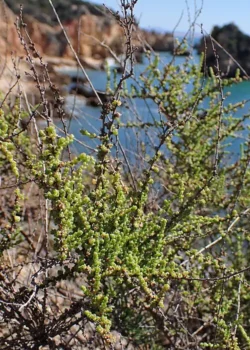
Shrubby Russian thistle is a perennial shrub that’s quite different from your typical garden plant. This multi-stemmed woody species typically grows to about 13-16 feet tall, though it can stay much smaller depending on conditions. Its most distinctive feature is its small, fleshy, cylindrical leaves that give it an almost succulent-like appearance. The flowers? Well, they’re pretty forgettable – small and inconspicuous, designed more for wind pollination than attracting admirers.
You might also see this plant listed under its synonym, Salsola damascena, but whatever name it goes by, it’s the same problematic species.
Native Status and Geographic Distribution
Here’s where things get complicated. Shrubby Russian thistle isn’t native to North America – it originally hails from the Mediterranean region, North Africa, and the Middle East. In the United States, it’s established itself in California, where it reproduces on its own without any human help.
- Species observed
- No observations
The Problem: It’s a Noxious Weed
This is the big red flag that should make you think twice. Shrubby Russian thistle has been classified as a noxious weed, meaning it’s officially recognized as harmful to agriculture, natural resources, or public health. When a plant gets this designation, it’s usually because it:
- Competes aggressively with native plants
- Can alter entire ecosystems
- May be difficult or expensive to control once established
- Provides little benefit to local wildlife
Garden Performance and Aesthetic Appeal
From a purely horticultural standpoint, shrubby Russian thistle is admittedly tough as nails. It thrives in USDA hardiness zones 8-11 and can handle serious drought once established. It prefers full sun and well-draining sandy or rocky soils – basically, the kind of challenging conditions that make other plants throw in the towel.
But let’s be honest about its looks: this isn’t a showstopper. The dense, branching structure and small succulent-like leaves give it an interesting texture, but it’s more utilitarian than beautiful. It’s typically used for erosion control in very arid environments, which tells you something about its aesthetic limitations.
Wildlife and Pollinator Benefits
Unfortunately, shrubby Russian thistle offers minimal benefits to local wildlife and pollinators. Its wind-pollinated flowers don’t attract bees, butterflies, or other beneficial insects. For birds and other wildlife, it’s essentially a green desert – taking up space without providing the food sources and habitat that native plants would offer.
Our Recommendation: Skip It
Given its noxious weed status and limited ecological benefits, we strongly recommend avoiding shrubby Russian thistle in your garden. While it might seem like an easy solution for difficult, dry sites, planting it could contribute to its spread and cause problems for local ecosystems.
Better Native Alternatives
Instead of shrubby Russian thistle, consider these native alternatives that can handle tough, dry conditions while supporting local wildlife:
- Four-wing saltbush (Atriplex canescens) – excellent for erosion control
- Desert broom (Baccharis sarothroides) – provides habitat and food for wildlife
- Chuparosa (Justicia californica) – attracts hummingbirds
- Brittlebush (Encelia farinosa) – beautiful yellow flowers and drought tolerance
These native options will give you the same tough, low-maintenance characteristics you’re looking for, but they’ll also support local ecosystems and won’t put you at odds with weed control regulations. Your garden – and your local environment – will thank you for making the more responsible choice.