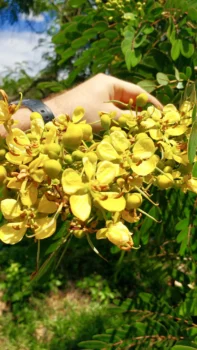
Siamese Cassia: A Tropical Beauty for Warm Climate Gardens
If you’re looking for a striking tropical tree that brings sunny yellow blooms to your landscape, you might want to get acquainted with Siamese cassia (Senna siamea). This perennial tree has been making itself at home in warm regions across the Pacific and Caribbean, though it’s not originally from these areas.
What is Siamese Cassia?
Siamese cassia, scientifically known as Senna siamea, is a medium to large tree that can reach impressive heights of 13-16 feet or more. You might also see it referenced by its former botanical names, Cassia siamea or Sciacassia siamea, but don’t let the name changes confuse you – it’s all the same lovely tree!
This woody perennial typically grows with a single trunk, though environmental conditions can sometimes encourage a more multi-stemmed, shorter growth form. What really catches the eye are its clusters of bright yellow flowers and delicate, feathery foliage that creates dappled shade below.
Where Does It Grow?
Originally hailing from Southeast Asia (particularly Thailand, Myanmar, and Laos), Siamese cassia has established itself as a non-native species in several U.S. territories. You’ll find it growing in Guam, Palau, Puerto Rico, and the U.S. Virgin Islands, where it reproduces naturally and has become part of the landscape.
- Species observed
- No observations
Should You Plant Siamese Cassia?
Here’s where things get interesting. While Siamese cassia isn’t classified as invasive or noxious, it is a non-native species that has naturalized in areas outside its original range. If you’re in USDA hardiness zones 9-11, it can certainly thrive in your garden, but consider these factors:
The Pros:
- Stunning yellow flower clusters that attract bees and butterflies
- Attractive, feathery foliage provides excellent shade
- Drought tolerant once established
- Low maintenance requirements
- Fast-growing specimen tree
The Considerations:
- As a non-native species, it doesn’t provide the same ecosystem benefits as native plants
- Limited to very warm climates (zones 9-11)
- May self-seed and spread beyond intended areas
Growing Siamese Cassia Successfully
If you decide to grow Siamese cassia, it’s actually quite forgiving. This tree loves full sun and well-draining soil, making it perfect for those sunny spots in your yard where other plants might struggle.
Young trees need regular watering to get established, but once mature, they’re impressively drought tolerant. You won’t need to fuss with heavy pruning – just remove any damaged or crossing branches to maintain its natural shape.
Garden Design Ideas
Siamese cassia works beautifully as a specimen tree in tropical and subtropical landscapes. Its size makes it perfect for providing shade over patios or seating areas, while the yellow blooms add a cheerful pop of color to parks and larger garden spaces.
Consider Native Alternatives
While Siamese cassia can be a lovely addition to warm-climate gardens, you might also want to explore native alternatives that provide similar benefits while supporting local ecosystems. Native trees in your area will typically require less water, provide better wildlife habitat, and be more resilient to local pests and diseases.
Before planting any tree, check with your local extension office or native plant society for recommendations on species that are both beautiful and ecologically beneficial in your specific region.
The Bottom Line
Siamese cassia is an undeniably attractive tree that can thrive in warm climates with minimal care. While it may not be native to U.S. territories, it’s not considered problematic enough to avoid entirely. Just remember to plant responsibly, consider native alternatives, and enjoy those cheerful yellow blooms if you do decide to welcome this tropical beauty into your landscape!