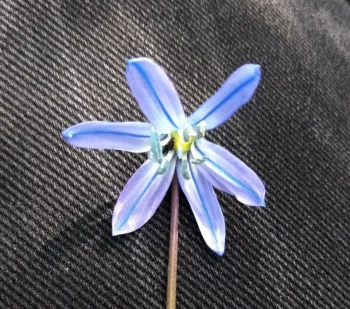
Siberian Squill: A Cheerful Early Spring Bloomer for Your Garden
When winter’s grip finally loosens and you’re desperately craving some color in your garden, Siberian squill (Scilla siberica) might just be the cheerful little bulb to brighten your spirits. This petite perennial produces carpets of brilliant blue flowers that seem to pop up almost overnight, creating a stunning display when most other plants are still snoozing.
What Exactly Is Siberian Squill?
Siberian squill is a small bulbous perennial that belongs to the forb family – basically, it’s a non-woody plant that comes back year after year. Despite its common name suggesting Siberian origins, this little beauty actually hails from southwestern Russia, the Caucasus, and Turkey. It’s also known by the botanical synonym Othocallis siberica, though most gardeners simply call it Siberian squill.
Standing just 4-6 inches tall, this compact plant produces narrow, strap-like leaves and delicate bell-shaped flowers in the most gorgeous shade of bright blue. Think of it as nature’s way of painting your garden with tiny brushstrokes of sky.
Where Does It Grow?
Siberian squill has made itself quite at home across much of North America. You’ll find it naturalized in Canadian provinces including New Brunswick, Ontario, and Quebec, as well as numerous U.S. states from the Northeast down to Kentucky and as far west as Utah and Minnesota. It’s worth noting that while it’s established in these areas, Siberian squill is not native to North America – it’s an introduced species that has proven quite adaptable to our climates.
- Species observed
- No observations
Should You Plant Siberian Squill?
Here’s the thing about Siberian squill – it’s a bit of a mixed bag. On the plus side, it’s absolutely gorgeous, incredibly hardy (thriving in USDA zones 2-8), and provides much-needed early nectar for bees and other pollinators when little else is blooming. It’s also wonderfully low-maintenance once established.
However, since it’s not native to North America, you might want to consider native alternatives that provide similar benefits while supporting local ecosystems. Some lovely native options include:
- Wild ginger for shaded areas
- Bloodroot for early spring white flowers
- Virginia bluebells for blue spring blooms
- Trout lily for woodland settings
That said, if you’re already dealing with established Siberian squill or specifically want this particular plant, it can certainly have a place in the right garden setting.
Perfect Spots for Siberian Squill
Siberian squill is quite the versatile little performer. It works beautifully in:
- Rock gardens where its small stature fits perfectly
- Woodland gardens under deciduous trees
- Cottage-style gardens for that informal, naturalized look
- As groundcover in areas where you want early spring color
The plant particularly shines when allowed to naturalize in drifts, creating those Instagram-worthy carpets of blue that make you forget winter ever existed.
Growing Siberian Squill Successfully
Good news for busy gardeners – Siberian squill is refreshingly unfussy. Here’s how to keep it happy:
Planting Tips
- Plant bulbs in fall, about 3 inches deep and 3 inches apart
- Choose a spot with well-drained soil (it’s not picky about soil type)
- Partial shade to full sun both work well
- Plant in groups for the best visual impact
Care and Maintenance
- Water during the growing season if rainfall is scarce
- Allow foliage to die back naturally – resist the urge to cut it down early
- No fertilizer needed in most soils
- Divide clumps every few years if they become overcrowded
The Pollinator Connection
One of Siberian squill’s best qualities is its timing. When it blooms in early spring, it’s often one of the first flowers available to hungry pollinators emerging from winter dormancy. Bees especially appreciate this early nectar source when they’re building up their energy reserves for the busy season ahead.
The Bottom Line
Siberian squill is undeniably charming and can add lovely early color to the right garden. While it’s not native to North America, it’s not currently classified as problematic in most areas where it grows. If you decide to plant it, enjoy those cheerful blue blooms, but also consider incorporating native spring ephemeral flowers to create a more ecologically supportive garden overall.
Remember, the best garden is one that brings you joy while supporting local wildlife – and sometimes that means making thoughtful choices about which non-native plants earn a spot in your landscape.