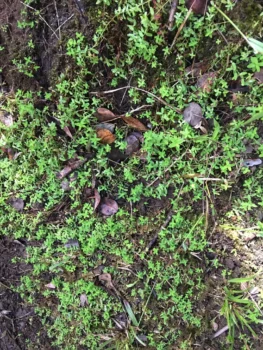
Sierra Madre St. Johnswort: A Lesser-Known Introduced Wildflower
If you’ve ever wandered through Hawaii’s diverse landscapes and spotted tiny yellow flowers dotting the ground, you might have encountered Sierra Madre St. Johnswort (Hypericum parvulum). This small, unassuming plant is part of the St. John’s wort family, but unlike its more famous cousins, it tends to fly under the radar in both botanical circles and garden centers.
What Exactly Is Sierra Madre St. Johnswort?
Sierra Madre St. Johnswort is a small herbaceous plant—what botanists call a forb—meaning it’s got soft, non-woody stems and stays relatively close to the ground. True to its annual-perennial nature, it can behave as either a short-lived annual or return for multiple seasons, depending on growing conditions. You might also see it listed under its scientific synonym, Hypericum degeneri, in older botanical references.
Where You’ll Find It
Currently, this plant has made itself at home exclusively in Hawaii within the United States. It’s what we call a naturalized species—meaning it wasn’t originally from Hawaii but has established itself there and now reproduces on its own without human intervention.
- Species observed
- No observations
The Good, The Bad, and The Practical
Let’s be honest: Sierra Madre St. Johnswort isn’t going to win any showstopper plant of the year awards. Its small yellow flowers and modest growth habit make it more of a background player than a garden star. However, it does have some interesting characteristics:
- Adapts to both wet and dry conditions (facultative wetland status)
- Low-maintenance once established
- Part of the historically significant St. John’s wort plant family
Should You Plant It?
Here’s where things get a bit complicated. Since Sierra Madre St. Johnswort is non-native to Hawaii and we don’t have complete information about its ecological impact, it falls into that gray area of proceed with caution. While it’s not currently listed as invasive or noxious, that doesn’t mean it won’t compete with native plants or potentially cause issues down the road.
If you’re gardening in Hawaii and considering this plant, ask yourself: are there native alternatives that could serve the same purpose? Hawaii has an incredible array of native wildflowers and ground covers that would provide better support for local wildlife and ecosystems.
Growing Conditions and Care
If you do encounter this plant or decide to work with it, here’s what we know about its preferences:
- Climate: Thrives in Hawaii’s tropical and subtropical conditions
- Moisture: Quite adaptable—can handle both wet and moderately dry conditions
- Maintenance: Generally low-maintenance as a naturalized species
- Hardiness: Limited to warm, frost-free areas
Unfortunately, detailed growing guides for this specific species are scarce, which tells you something about its popularity (or lack thereof) in cultivation.
The Bottom Line
Sierra Madre St. Johnswort represents one of those plants that exists quietly in the background of Hawaii’s introduced flora. While it’s not necessarily harmful, it’s also not particularly beneficial from a gardening or ecological standpoint. If you’re passionate about supporting Hawaii’s unique ecosystems, consider exploring native Hawaiian plants instead—they’re often more beautiful, better adapted to local conditions, and provide crucial support for native wildlife.
Sometimes the most responsible thing we can do as gardeners is to appreciate these naturalized species where they are while making more thoughtful choices for our own landscapes.