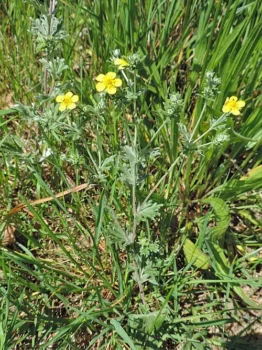
Silver Cinquefoil: A Hardy Ground Cover for Challenging Garden Spots
If you’re looking for a tough, low-maintenance ground cover that can handle less-than-perfect growing conditions, silver cinquefoil (Potentilla argentea) might just be the plant you’ve been searching for. This unassuming little perennial has been quietly making itself at home in gardens across North America, offering cheerful yellow blooms and distinctive silvery foliage that catches the eye.
What is Silver Cinquefoil?
Silver cinquefoil is a low-growing perennial forb – that’s garden-speak for a non-woody herbaceous plant. True to its name, this plant sports leaves with silvery-white undersides that create a lovely contrast against the green tops. The cinquefoil part of its name refers to its five-leaflet leaves, though you might occasionally spot some with three or seven leaflets just to keep things interesting.
As a non-native species originally from Europe and western Asia, silver cinquefoil has naturalized across much of North America. It’s established populations in numerous states and provinces, from Alberta and British Columbia down to Arizona and across to the Atlantic coast.
- Species observed
- No observations
Why Gardeners Choose Silver Cinquefoil
There are several reasons why this hardy little plant has found its way into gardens:
- Drought tolerance: Once established, it can handle dry conditions like a champ
- Poor soil tolerance: It doesn’t demand rich, fertile soil to thrive
- Low maintenance: This is definitely a plant it and forget it kind of perennial
- Extended bloom period: Small but cheerful yellow flowers appear from late spring through summer
- Ground cover potential: Forms spreading mats that help suppress weeds
- Pollinator support: The flowers attract bees, small butterflies, and other beneficial insects
Garden Design and Landscape Uses
Silver cinquefoil works beautifully in several garden settings:
- Rock gardens: Its low profile and drought tolerance make it perfect for tucking between stones
- Naturalized areas: Great for creating that wild meadow look
- Erosion control: The spreading habit helps stabilize slopes and embankments
- Cottage gardens: Adds a charming, informal touch
- Low-maintenance landscapes: Ideal for areas where you want color without constant care
Growing Conditions and Care
One of silver cinquefoil’s greatest strengths is its adaptability. Here’s what it prefers:
Sunlight: Full sun to partial shade, though it flowers best with plenty of sunlight
Soil: Well-drained soils are essential, but it’s not picky about fertility. In fact, it often performs better in average to poor soils than in rich, heavily fertilized areas.
Water: Drought tolerant once established, but benefits from occasional watering during extended dry spells
Hardiness: Thrives in USDA zones 3-8, making it suitable for most temperate climates
Wetland considerations: This plant generally prefers upland conditions and rarely thrives in consistently wet soils, making it perfect for those challenging dry spots in your garden.
Planting and Maintenance Tips
Getting silver cinquefoil established in your garden is refreshingly straightforward:
- Planting time: Spring or fall are ideal
- Spacing: Allow 12-18 inches between plants if you’re using multiple specimens
- Watering: Water regularly during the first growing season, then reduce frequency as the plant establishes
- Fertilizing: Generally unnecessary – this plant prefers lean conditions
- Pruning: Minimal pruning needed; you can deadhead spent flowers to encourage more blooms
- Spreading: Keep an eye on its spread, as it can expand via runners and self-seeding
Things to Consider
While silver cinquefoil is generally well-behaved, there are a few things to keep in mind. As a non-native species, it may not provide the same level of ecological benefits as native plants. It can also spread more readily than some gardeners expect, so consider its placement carefully.
If you’re interested in supporting local ecosystems, you might want to explore native alternatives such as wild strawberry (Fragaria species), native potentilla species like shrubby cinquefoil (Dasiphora fruticosa), or other native ground covers suited to your region.
The Bottom Line
Silver cinquefoil offers a practical solution for gardeners dealing with challenging growing conditions. Its combination of drought tolerance, low maintenance requirements, and cheerful flowers makes it a solid choice for rock gardens, naturalized areas, and other informal landscape settings. While it may not be the most showstopping plant in your garden, it’s certainly one of the most reliable – and sometimes, that’s exactly what you need.