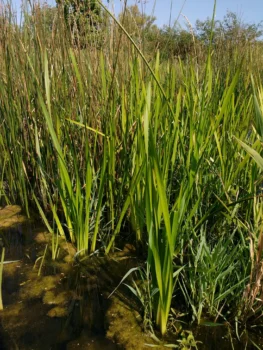
Simplestem Bur-Reed: A Water Plant You Should Skip in Your Garden
If you’ve been dreaming of adding some aquatic flair to your water garden, you might have stumbled across simplestem bur-reed (Sparganium erectum). While this perennial water plant might look appealing with its grass-like foliage and distinctive spiky seed heads, there are some serious reasons why you should think twice before introducing it to your landscape.
What Is Simplestem Bur-Reed?
Simplestem bur-reed, also known as exotic bur-reed, is a herbaceous perennial that loves to get its feet wet—literally. This forb grows as an emergent aquatic plant, meaning it roots underwater but sends its leaves and flowers up above the surface. With its upright, grass-like appearance and those characteristic round, bristly seed heads that look like medieval maces, it’s certainly eye-catching.
The Problem: It’s Not Supposed to Be Here
Here’s the big issue: simplestem bur-reed isn’t native to North America. Originally from Europe and western Asia, this plant has made itself quite comfortable in various U.S. states, including California, Idaho, New Jersey, New York, Oregon, Vermont, Washington, West Virginia, Wisconsin, and Wyoming. Unfortunately, it’s been so successful at establishing itself that it’s now classified as a noxious weed.
- Species observed
- No observations
Why You Should Avoid Planting It
Being listed as noxious isn’t just a bureaucratic label—it means this plant can cause real ecological problems. When non-native plants like simplestem bur-reed establish in natural waterways, they can:
- Outcompete native aquatic plants that local wildlife depends on
- Alter water flow and sediment patterns
- Reduce biodiversity in aquatic ecosystems
- Spread rapidly through underground rhizomes, making control difficult
Native Alternatives That Actually Belong
The good news? There are plenty of gorgeous native aquatic plants that can give you the same aesthetic appeal without the ecological baggage. Consider these alternatives instead:
- Wild rice (Zizania species) – offers similar grass-like foliage
- Arrowhead (Sagittaria latifolia) – beautiful white flowers and distinctive leaves
- Pickerel rush (Pontederia cordata) – stunning blue flower spikes
- Native sedges and rushes – diverse options for different growing conditions
If You Already Have It
If simplestem bur-reed has already found its way into your water feature, it’s best to remove it responsibly. Contact your local extension office or invasive species management program for guidance on proper removal and disposal methods. Don’t just pull it up and toss it in your compost—those seeds and plant fragments can spread the problem elsewhere.
The Bottom Line
While simplestem bur-reed might seem like an interesting addition to a water garden, its status as a noxious, non-native species makes it a poor choice for responsible gardeners. By choosing native alternatives instead, you’ll create a more sustainable landscape that supports local ecosystems while still achieving the beautiful aquatic garden you’re dreaming of. Your local wildlife—and fellow gardeners downstream—will thank you for it.