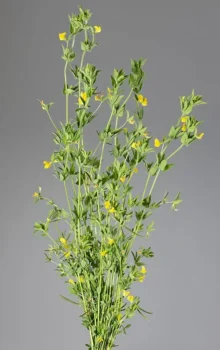
Slender Bird’s-Foot Trefoil: A Delicate Mediterranean Annual for Mild Climates
If you’re looking for a delicate, low-growing annual with cheerful yellow flowers, you might have come across slender bird’s-foot trefoil (Lotus angustissimus). This Mediterranean native has found its way into California gardens, where it quietly carpets areas with its fine foliage and dainty blooms. But is it right for your garden? Let’s dive into what makes this little plant tick.
Getting to Know Slender Bird’s-Foot Trefoil
Slender bird’s-foot trefoil is a non-native annual forb that originally hails from the Mediterranean region of southern Europe. As its name suggests, this plant is indeed slender – everything about it is delicate and fine-textured, from its narrow leaflets to its petite flowers. You might also see it listed under the synonym Lotus corniculatus var. ciliatus, but don’t let the scientific names confuse you.
This little charmer has established itself in California, where it reproduces on its own and persists without human intervention. While it’s not native to North America, its current invasive or noxious status remains unclear, so gardeners should proceed thoughtfully.
- Species observed
- No observations
What Does It Look Like?
Picture a plant that’s all about subtlety. Slender bird’s-foot trefoil produces small, bright yellow pea-like flowers that seem to dance above finely divided foliage. The leaves are composed of narrow leaflets that give the plant an almost feathery appearance. As an annual, it completes its entire life cycle in one growing season, but it’s quite good at self-seeding for the following year.
Garden Role and Landscape Use
This Mediterranean native works best as:
- Ground cover in naturalized areas
- Addition to wildflower meadow mixes
- Filler plant in Mediterranean-style gardens
- Component in drought-tolerant landscapes
Its delicate nature makes it more suitable for informal garden settings rather than formal landscapes. Think cottage gardens, naturalized slopes, or areas where you want a soft, meadow-like appearance.
Growing Conditions and Care
Slender bird’s-foot trefoil is surprisingly easy-going for such a delicate-looking plant. Here’s what it needs to thrive:
- Sunlight: Full sun is preferred
- Soil: Well-draining soils; doesn’t tolerate waterlogged conditions
- Water: Drought-tolerant once established; avoid overwatering
- Climate: Best suited for USDA zones 8-10 (mild winter areas)
Planting and Propagation
The easiest way to establish slender bird’s-foot trefoil is through direct seeding:
- Sow seeds in fall or early spring
- Scatter seeds on prepared soil surface
- Lightly rake to ensure good soil contact
- Water gently until germination occurs
- Once established, minimal care is needed
This plant is quite good at self-seeding, so you may find it returning year after year without any effort on your part.
Benefits for Pollinators and Wildlife
The small yellow flowers of slender bird’s-foot trefoil do attract bees and other small pollinators, providing them with nectar. However, as a non-native species, it doesn’t offer the same ecological benefits as native plants that have co-evolved with local wildlife.
Should You Plant It?
While slender bird’s-foot trefoil isn’t invasive (as far as we know), thoughtful gardeners might want to consider native alternatives that provide similar aesthetic appeal while supporting local ecosystems. Some native options to consider include:
- Native clovers and vetches
- California poppies for similar bright color
- Native lupines for pea-family plants
- Local wildflower mixes designed for your region
If you do choose to grow slender bird’s-foot trefoil, monitor its spread and be prepared to manage it if it becomes too aggressive in your garden. Its self-seeding nature means a little can quickly become a lot!
The Bottom Line
Slender bird’s-foot trefoil is a charming little annual that can add delicate texture and bright yellow blooms to Mediterranean-style gardens in mild climates. While it’s relatively low-maintenance and drought-tolerant, consider whether native alternatives might better serve both your garden goals and local ecosystem health. Whatever you choose, happy gardening!