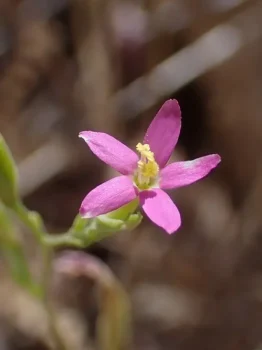
Slender Centaury: A Delicate Annual with Old World Charm
If you’ve ever spotted tiny pink flowers dancing on slender stems in disturbed soils or along wetland edges, you might have encountered slender centaury (Centaurium tenuiflorum). This dainty annual brings a touch of European countryside charm to American landscapes, though it arrives with an interesting backstory.
What is Slender Centaury?
Slender centaury is a delicate annual forb – essentially a non-woody flowering plant that completes its entire life cycle in one growing season. True to its name, this plant produces slender, upright stems topped with small, star-shaped pink flowers that create an airy, almost ethereal appearance in the garden.
As a forb, slender centaury lacks significant woody tissue and maintains its perennating buds at or below ground surface, making it perfectly adapted for quick establishment and reproduction in suitable conditions.
Native Status and Geographic Distribution
Here’s where things get interesting: slender centaury isn’t actually native to North America. This European transplant has naturalized across several U.S. states, establishing self-sustaining populations that persist without human intervention. Currently, you’ll find it growing wild in California, Louisiana, Mississippi, Oregon, and Texas.
- Species observed
- No observations
While it’s non-native, slender centaury hasn’t been flagged as invasive or noxious, meaning it generally plays well with existing ecosystems without causing major disruptions.
Aesthetic Appeal and Garden Role
Don’t expect bold, showy blooms with slender centaury – its beauty lies in subtlety. The small pink flowers create a fine-textured, wispy effect that works beautifully as a filler plant or naturalized accent. Think of it as nature’s confetti, adding gentle movement and delicate color to garden spaces.
In landscape design, slender centaury excels in:
- Wildflower meadows and prairie-style plantings
- Cottage garden settings
- Naturalized areas along water features
- Temporary seasonal color in disturbed site restoration
Growing Conditions and Care
Slender centaury is refreshingly low-maintenance, especially if you can provide its preferred conditions. This plant has a particular affinity for wetland environments, earning a Facultative Wetland status across multiple regions including the Arid West, Atlantic and Gulf Coastal Plain, Great Plains, and Western Mountains.
Ideal growing conditions include:
- Full sun to partial shade
- Moist to wet soils (though it tolerates some variation)
- Poor to average soil fertility
- Good drainage despite moisture preference
- USDA hardiness zones 5-10
Planting and Care Tips
The beauty of slender centaury lies in its self-sufficient nature. Once established, it readily self-sows, creating naturalized drifts that return year after year. Here’s how to work with this independent spirit:
- Seeding: Scatter seeds in early spring on prepared soil surface
- Establishment: Keep soil consistently moist during germination
- Maintenance: Minimal care required once established
- Self-sowing: Allow some plants to go to seed for natural reproduction
- Soil preference: Thrives in disturbed soils and naturalized settings
Wildlife and Pollinator Benefits
While small in stature, slender centaury’s flowers provide nectar for various small pollinators, including flies, small bees, and other beneficial insects. Its seeds may also provide food for small birds, though it’s not considered a major wildlife plant.
Should You Plant Slender Centaury?
Slender centaury can be a charming addition to the right garden setting, particularly if you’re creating naturalized areas or working with challenging, moist conditions. However, since it’s non-native, consider exploring native alternatives first.
Great native alternatives include:
- Wild bergamot (Monarda species)
- Native asters and goldenrods
- Regional wildflower mixes
- Local wetland plants suited to your area
If you do choose to grow slender centaury, embrace its naturalistic qualities and pair it with other plants that appreciate similar conditions. Just remember that its self-sowing nature means you’ll likely have it as a permanent garden resident – which could be exactly what you’re looking for in a low-maintenance, moisture-loving annual!