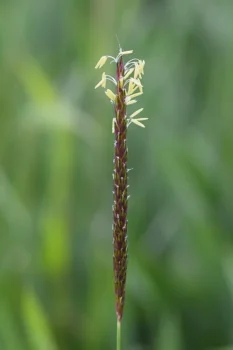
Slender Meadow Foxtail: A Weedy Grass You Probably Don’t Want in Your Garden
If you’ve stumbled across slender meadow foxtail (Alopecurus myosuroides) in your yard, you’re likely dealing with an uninvited guest rather than admiring a prized garden specimen. This annual grass, also known by its botanical synonym Alopecurus agrestis, has made itself quite at home across North America despite being originally from Europe and western Asia.
What Is Slender Meadow Foxtail?
Slender meadow foxtail is an annual grass that grows in a bunch-like formation, reaching about 2.3 feet tall at maturity. Don’t let the foxtail name fool you into thinking it’s particularly showy – this grass produces inconspicuous green flowers during summer that won’t win any beauty contests. The fine-textured green foliage has a porous quality and grows in a somewhat decumbent (sprawling) pattern.
Where You’ll Find It
This non-native grass has established itself across a surprisingly wide range of North American locations. You can find slender meadow foxtail in states spanning from coast to coast, including Alabama, California, Delaware, Kansas, Kentucky, Louisiana, Maine, Maryland, Massachusetts, Michigan, Mississippi, New Jersey, New Mexico, New York, North Carolina, Ohio, Oregon, Pennsylvania, Rhode Island, South Carolina, Texas, Virginia, Washington, and West Virginia. It’s also present in Manitoba, Canada.
- Species observed
- No observations
Growing Conditions and Habitat
One thing you can say about slender meadow foxtail – it’s not particularly picky about where it grows. This adaptable grass can handle:
- Various soil types from coarse to fine textures
- pH levels ranging from acidic (4.0) to neutral (7.5)
- High moisture conditions (it’s classified as a facultative wetland plant)
- Temperatures as low as -28°F
- Areas with 35-55 inches of annual precipitation
However, it does have some limitations – it can’t tolerate drought, salinity, or much shade, and it has no fire tolerance whatsoever.
Why You Probably Don’t Want This in Your Garden
While slender meadow foxtail isn’t officially classified as invasive, it’s definitely not winning any awards for garden merit. Here’s why most gardeners consider it more of a nuisance than an asset:
- Limited aesthetic appeal with inconspicuous flowers and unremarkable foliage
- Provides minimal benefits to pollinators (it’s wind-pollinated)
- Unknown wildlife value
- Tends to appear in disturbed areas and agricultural settings as a weed
- Moderate growth rate means it can establish quickly in suitable conditions
Native Alternatives to Consider
Instead of dealing with this weedy import, consider these native grass alternatives that offer much more to your garden ecosystem:
- Native foxtail grasses like yellow foxtail (where native)
- Little bluestem for prairie-style gardens
- Buffalo grass for drought-tolerant lawns
- Native sedges for wet areas
Managing Slender Meadow Foxtail
If you’re dealing with established slender meadow foxtail, remember that it’s an annual grass, so preventing seed production is key. Since it produces seeds from summer through fall and can produce up to 560,000 seeds per pound, early intervention is crucial. The seeds don’t persist long in the soil, which is good news for management efforts.
The plant spreads slowly by seed and doesn’t have vegetative spread, so mechanical removal before seed set can be effective for small infestations.
The Bottom Line
While slender meadow foxtail isn’t going to take over your entire landscape, it’s certainly not adding much value either. This European immigrant is best appreciated for what it teaches us about plant adaptability rather than for any ornamental qualities. If you’re looking to create a beautiful, ecologically beneficial garden, you’re much better off choosing native grasses that will support local wildlife and provide genuine aesthetic appeal.
Save your garden space for plants that truly deserve it – your local pollinators and wildlife will thank you!