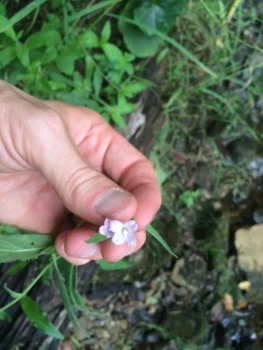
Smallflower Hairy Willowherb: A Moisture-Loving Perennial for Wet Gardens
If you’ve got a soggy spot in your garden that seems impossible to plant, meet smallflower hairy willowherb (Epilobium parviflorum). This unassuming perennial might just be the solution you’ve been looking for – though it comes with a few things to consider first.
What is Smallflower Hairy Willowherb?
Smallflower hairy willowherb is a herbaceous perennial forb that belongs to the evening primrose family. As its name suggests, this plant produces small, delicate flowers and has a somewhat fuzzy appearance thanks to fine hairs on its stems and leaves. Don’t let the modest size fool you – this little plant is tougher than it looks and has quite the personality when it comes to spreading.
Native Status and Geographic Distribution
Here’s where things get interesting: smallflower hairy willowherb isn’t actually native to North America. This European and Asian native has made itself at home across parts of Canada and the United States, reproducing spontaneously in the wild. You’ll find established populations in British Columbia, Ontario, Michigan, New York, Ohio, and Pennsylvania.
- Species observed
- No observations
While it’s not considered invasive or noxious in most areas, its non-native status means you might want to consider native alternatives that provide similar benefits to local ecosystems.
Appearance and Growth Characteristics
Smallflower hairy willowherb produces small pink to purple flowers that bloom throughout the summer months. The lance-shaped leaves have a slightly fuzzy texture, and the entire plant typically reaches a modest height. As a perennial forb, it lacks woody tissue and dies back to the ground each winter, returning from its roots the following spring.
This plant has a moderate growth rate and can spread through both seeds and underground shoots, so be prepared for it to naturalize in favorable conditions.
Growing Conditions and Hardiness
If you’re dealing with wet, boggy conditions, this plant might be your new best friend. Smallflower hairy willowherb thrives in:
- Moist to wet soils (it’s practically built for soggy conditions)
- Full sun to partial shade
- USDA hardiness zones 3-8
- Areas with consistent moisture
Wetland Status
This plant’s relationship with water varies by region. In the Eastern Mountains and Piedmont, it’s considered an obligate wetland plant, meaning it almost always occurs in wetlands. In the Midwest and Northcentral/Northeast regions, it’s classified as facultative wetland, usually found in wetlands but occasionally tolerating drier conditions.
Garden Uses and Landscape Design
Smallflower hairy willowherb works best in:
- Rain gardens and bioswales
- Pond or stream edges
- Naturalized wet meadow areas
- Low-maintenance moisture gardens
It’s not typically a showstopper for formal gardens, but it can provide reliable ground cover in challenging wet areas where other plants struggle.
Pollinator and Wildlife Benefits
The small flowers attract various pollinators, including bees and butterflies, providing nectar throughout the growing season. However, since this is a non-native species, it may not provide the same level of ecosystem support as native alternatives.
Planting and Care Tips
Growing smallflower hairy willowherb is refreshingly straightforward:
- Plant in consistently moist to wet soil
- Ensure adequate moisture – this plant does not tolerate drought well
- Expect self-seeding; deadhead if you want to control spread
- Minimal fertilization needed in rich, moist soils
- Cut back in late fall or early spring
Should You Plant It?
Smallflower hairy willowherb can be a practical solution for wet, difficult areas where native options are limited. However, consider these native alternatives that provide similar moisture-loving characteristics:
- Blue flag iris (Iris versicolor)
- Swamp milkweed (Asclepias incarnata)
- Cardinal flower (Lobelia cardinalis)
- Monkey flower (Mimulus species)
If you do choose to grow smallflower hairy willowherb, monitor its spread and be prepared for a plant that knows how to make itself at home. It’s a reliable performer in wet conditions, but like many non-natives, it can be a bit too enthusiastic about staying once it’s settled in.
Whether you’re dealing with a perpetually soggy corner or creating a rain garden, understanding your options – both native and non-native – helps you make the best choice for your specific garden goals and local ecosystem.