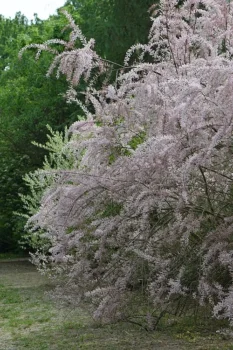
Smallflower Tamarisk: A Delicate Mediterranean Beauty for Your Garden
If you’re looking for a graceful shrub that brings a touch of Mediterranean charm to your landscape, smallflower tamarisk (Tamarix parviflora) might just be the plant you’ve been searching for. This feathery-leafed beauty offers delicate blooms and impressive resilience, making it a fascinating addition to many garden styles.
What Exactly is Smallflower Tamarisk?
Smallflower tamarisk is a perennial shrub that typically grows as a multi-stemmed woody plant, usually reaching heights of 13 to 16 feet, though it can sometimes grow taller under the right conditions. You might also see it referenced by its synonym, Tamarix tetrandra, in some older gardening references.
This plant hails from the Mediterranean region, specifically southeastern Europe and western Asia, but has found its way into gardens across much of the United States. As a non-native species, it’s managed to establish itself and reproduce naturally in many areas, spreading across 28 states from coast to coast.
Where You’ll Find It Growing
Smallflower tamarisk has quite an impressive range across America, thriving in states including Arizona, California, Colorado, Connecticut, Delaware, Florida, Idaho, Illinois, Kansas, Kentucky, Louisiana, Massachusetts, Michigan, Mississippi, Missouri, Montana, Nevada, New Jersey, New Mexico, North Carolina, Oklahoma, Oregon, Pennsylvania, Tennessee, Texas, Utah, Virginia, and Washington.
- Species observed
- No observations
The Appeal of Feathery Foliage and Delicate Blooms
What makes smallflower tamarisk so charming? Picture this: graceful, arching branches covered in fine, feathery foliage that creates an almost ethereal appearance in your garden. Come spring, the shrub bursts into bloom with masses of tiny pink to white flowers that create a cloud-like effect. It’s the kind of plant that adds texture and movement to a landscape, swaying gently in the breeze.
Where Does Smallflower Tamarisk Fit in Your Garden?
This adaptable shrub works wonderfully in several landscape settings:
- Mediterranean-style gardens where its natural origins shine
- Xeriscaped areas thanks to its drought tolerance
- Coastal gardens where it can handle salt exposure
- As a windbreak or erosion control on slopes
- Mixed shrub borders where its delicate texture contrasts nicely with bolder plants
Growing Conditions That Make It Happy
One of the best things about smallflower tamarisk is how easygoing it is. This shrub thrives in USDA hardiness zones 4 through 9, making it suitable for most temperate climates. It absolutely loves full sun and well-drained soils, and once established, it’s remarkably drought tolerant.
The plant’s wetland status varies by region – in some areas it’s classified as facultative (equally happy in wet or dry conditions), while in others it leans toward preferring wetter conditions. This flexibility makes it quite adaptable to different garden situations.
Planting and Care Tips
Growing smallflower tamarisk successfully is refreshingly straightforward:
- Plant in full sun for best flowering and growth
- Ensure good drainage – soggy soil is about the only thing this plant dislikes
- Water regularly the first year to help establishment, then reduce watering
- Prune right after flowering if you want to maintain shape or size
- Enjoy the low-maintenance nature once it’s settled in
Benefits for Pollinators
Those delicate spring flowers aren’t just pretty to look at – they’re also valuable for bees and other small pollinators who appreciate the nectar source, especially early in the growing season when other flowers might be scarce.
Should You Plant It?
Smallflower tamarisk can be a lovely addition to the right garden, especially if you’re creating a Mediterranean theme or need a tough, drought-tolerant shrub. However, since it’s not native to North America, you might also consider native alternatives that provide similar benefits while supporting local ecosystems.
Some native options to consider include desert willow (Chilopsis linearis) for southwestern gardens, or native viburnums and elderberries for other regions. These alternatives can provide similar ornamental value while offering greater benefits to native wildlife.
Whether you choose smallflower tamarisk or a native alternative, the key is selecting plants that thrive in your specific conditions and contribute to the garden style you’re hoping to achieve. After all, the best garden is one that brings you joy while working harmoniously with your local environment.