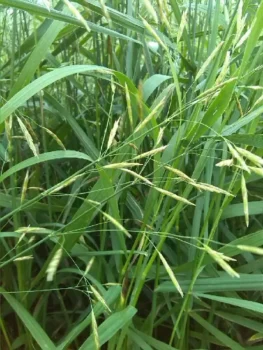
Smooth Brome: Why This European Grass Isn’t Welcome in Your Garden
If you’ve ever wondered about that tall, dense grass taking over roadsides and abandoned fields, you might be looking at smooth brome (Bromus inermis). While this perennial grass might seem like a hardy, low-maintenance option for your landscape, there’s a big reason why you’ll want to steer clear of it in your garden.
What is Smooth Brome?
Smooth brome is a perennial grass that originally called Europe and Asia home. This fine-textured grass can grow up to 2.5 feet tall and forms dense, spreading colonies through underground stems called rhizomes. With its green foliage and modest yellow flowers that bloom in late spring, it might not look particularly threatening—but looks can be deceiving.
The Invasive Reality
Here’s where things get problematic: smooth brome is classified as invasive in Missouri and has naturalized across most of North America, from Alaska to Texas. This grass is a master at taking over native grasslands and crowding out the plants that belong there. Once it establishes itself, its aggressive rhizome system makes it incredibly difficult to remove.
Where You’ll Find It
Smooth brome has spread to virtually every state and Canadian province, thriving in diverse climates from the frozen north to the desert southwest. It’s particularly common in disturbed areas like roadsides, abandoned lots, and degraded grasslands.
- Species observed
- No observations
Growing Characteristics (That Make It Problematic)
Understanding why smooth brome is such a successful invader helps explain why it’s not garden-friendly:
- Rapid spread: Vegetative spread rate is rapid via rhizomes
- Adaptable: Tolerates pH levels from 5.5 to 8.0
- Drought tolerant: Once established, needs minimal water
- Cold hardy: Survives temperatures down to -43°F (USDA zones 3-9)
- Long-lived: Perennial nature means it’s in it for the long haul
- Dense growth: Forms thick stands that exclude other plants
Why Not to Plant It
While smooth brome might seem appealing for erosion control or low-maintenance ground cover, here’s why it’s a no-go:
- It will escape your yard and invade natural areas
- Nearly impossible to remove once established
- Crowds out native plants that support local wildlife
- Offers minimal benefits to pollinators (it’s wind-pollinated)
- Can become a maintenance nightmare in garden settings
Better Native Alternatives
Instead of smooth brome, consider these native grass alternatives that provide similar benefits without the invasive behavior:
- Little bluestem – Beautiful native bunch grass with fall color
- Buffalo grass – Drought-tolerant native for western regions
- Prairie dropseed – Elegant native with fragrant flowers
- Blue grama – Hardy native grass perfect for xeriscaping
What to Do If You Have It
If smooth brome has already established in your yard, removal requires persistence. The rhizome system means you’ll need to dig out root systems entirely or use repeated mowing to weaken the plants over several seasons. Consider consulting with local extension services for management strategies specific to your area.
The Bottom Line
While smooth brome might look like an easy landscaping solution, its invasive nature makes it a poor choice for responsible gardeners. By choosing native alternatives, you’ll create a more sustainable landscape that supports local ecosystems while still getting the coverage and erosion control you need. Your local wildlife—and your neighbors—will thank you for making the native choice.