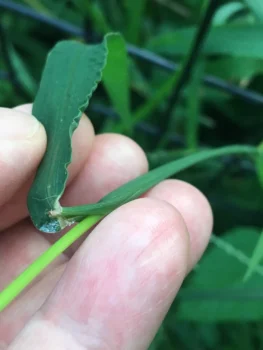
Smooth Crabgrass: The Uninvited Guest That’s Here to Stay
If you’ve ever battled weeds in your lawn or garden, chances are you’ve encountered smooth crabgrass (Digitaria ischaemum) without even knowing its name. This low-growing annual grass has a knack for showing up uninvited and making itself right at home across North America, despite originally hailing from Europe and Asia.
What Exactly Is Smooth Crabgrass?
Smooth crabgrass is an annual graminoid – basically a grass-like plant that completes its entire life cycle in one growing season. Don’t let the smooth part fool you; this little troublemaker can be quite the handful once it establishes itself. You might also see it listed in botanical references under several scientific synonyms, including Panicum ischaemum or Syntherisma ischaemum, but they’re all referring to the same plant.
Where You’ll Find This Persistent Visitor
Originally from Europe and Asia, smooth crabgrass has made itself comfortable across an impressive range of North American territory. It now grows throughout the United States, from coast to coast, and has spread into Canadian provinces including Alberta, British Columbia, Manitoba, and several Maritime provinces. You’ll even find it in Puerto Rico and the U.S. Virgin Islands – talk about adaptable!
- Species observed
- No observations
Should You Plant Smooth Crabgrass? (Spoiler Alert: Probably Not)
Here’s the thing about smooth crabgrass – it’s rarely planted on purpose. As a non-native species that reproduces and persists without any help from humans, it’s more likely to show up whether you want it or not. While it’s not officially classified as invasive, it certainly doesn’t need any encouragement to spread.
From an aesthetic standpoint, smooth crabgrass doesn’t offer much in the way of ornamental value. It’s a low-growing annual with narrow leaves and produces small, finger-like seed heads that most gardeners find more weedy than attractive.
Where It Likes to Grow
Smooth crabgrass is remarkably adaptable when it comes to growing conditions. It typically prefers upland areas (non-wetland environments) and thrives in:
- Disturbed soil areas
- Full sun locations
- Various soil types
- Areas with bare or thin ground cover
The plant shows different wetland preferences depending on the region. In most areas, it’s classified as Obligate Upland, meaning it almost never occurs in wetlands. However, in some western regions and parts of the Midwest and Northeast, it’s considered Facultative Upland, meaning it usually sticks to dry areas but might occasionally pop up in wetter spots.
Better Native Alternatives
Instead of smooth crabgrass, consider these native grass alternatives that provide similar ground coverage with much better ecological benefits:
- Buffalo grass (Bouteloua dactyloides) for prairie regions
- Blue grama (Bouteloua gracilis) for western areas
- Fine fescue species for cooler climates
- Native sedges (Carex species) for various conditions
These natives offer better support for local wildlife, stronger root systems for erosion control, and often require less maintenance once established.
If It Shows Up Anyway
Since smooth crabgrass is an annual, prevention is your best strategy. It germinates from seed each year, typically in late spring and early summer when soil temperatures warm up. Maintaining thick, healthy turf or ground cover gives it fewer opportunities to establish.
The plant produces wind-dispersed seeds, so it doesn’t provide significant benefits to pollinators or wildlife compared to native alternatives. Its main ecological role seems to be filling in disturbed areas, which can help prevent soil erosion but doesn’t contribute much to supporting local ecosystems.
The Bottom Line
While smooth crabgrass isn’t going to harm your garden beyond competing with your desired plants, there’s really no compelling reason to plant it intentionally. Its widespread distribution across USDA hardiness zones 3-10 shows just how adaptable it is – perhaps too adaptable for most gardeners’ liking.
Focus your energy on establishing native grasses and ground covers that will provide better long-term benefits for both your landscape and local wildlife. Your garden (and the local ecosystem) will thank you for it!