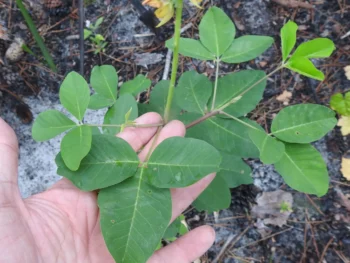
Smooth Rattlebox: A Beautiful But Problematic Garden Choice
If you’ve ever heard the distinctive rattle of dried seed pods in your garden and wondered what plant was making that sound, you might have encountered smooth rattlebox. This eye-catching perennial herb goes by many names—including smooth crotalaria, smooth rattlepod, and striped crotalaria—but regardless of what you call it, this plant comes with some serious considerations for home gardeners.
What Is Smooth Rattlebox?
Smooth rattlebox (Crotalaria pallida) is a non-native perennial herb that has made itself at home across the southeastern United States and various Pacific territories. As a member of the pea family, this plant produces cheerful yellow flowers that eventually develop into inflated pods—the source of its common name. When these pods dry out, the seeds inside create a distinctive rattling sound that’s both charming and unmistakable.
This vascular plant lacks significant woody tissue, classifying it as a forb or herb. Despite its delicate appearance, smooth rattlebox is surprisingly hardy and can persist year after year once established.
Where You’ll Find It
Originally from tropical and subtropical regions of the Americas, smooth rattlebox has spread far beyond its native range. Today, you’ll find it growing in Alabama, Florida, Georgia, Hawaii, Mississippi, North Carolina, South Carolina, and various U.S. territories including Guam, Palau, Puerto Rico, and the Virgin Islands.
- Species observed
- No observations
The plant shows remarkable adaptability to different moisture conditions. In most regions, it prefers upland areas but can occasionally tolerate wetland conditions. In Hawaii, it’s equally comfortable in both wet and dry environments.
The Beauty and the Beast
There’s no denying that smooth rattlebox has aesthetic appeal. The bright yellow, pea-like flowers create a cheerful display, and the interesting inflated seed pods add textural interest to the garden. The plant also attracts pollinators, particularly bees and butterflies, which appreciate the nectar-rich blooms.
However, this beauty comes with a significant downside: smooth rattlebox contains toxic alkaloids throughout the entire plant. These compounds can be dangerous to both humans and animals, making it a poor choice for gardens where children or pets might come into contact with it. Livestock are particularly at risk, as even small amounts can cause serious health issues.
Growing Conditions and Care
If you’re determined to grow smooth rattlebox despite the safety concerns, it’s relatively easy to cultivate. The plant thrives in:
- Full sun exposure
- Well-draining soil
- USDA hardiness zones 9-11
- Drought conditions once established
Smooth rattlebox is surprisingly low-maintenance and drought-tolerant, making it suitable for gardeners in warmer climates who want a plant that can handle neglect. However, its ease of growth is actually part of the problem—it can spread readily and potentially become weedy in some areas.
Should You Plant Smooth Rattlebox?
While smooth rattlebox isn’t currently listed as invasive or noxious, most gardening experts recommend against planting it in home landscapes. The combination of toxicity concerns and its aggressive spreading habit make it more trouble than it’s worth for most gardeners.
Instead, consider these native alternatives that offer similar benefits without the risks:
- Wild senna (Senna hebecarpa) – produces yellow flowers and interesting seed pods
- Partridge pea (Chamaecrista fasciculata) – offers yellow blooms and attracts pollinators
- Wild indigo species (Amorpha spp.) – provides nitrogen fixation and wildlife benefits
The Bottom Line
Smooth rattlebox might catch your eye with its sunny flowers and interesting seed pods, but this is one plant that’s better admired from a distance. The serious safety concerns, combined with its weedy tendencies, make it unsuitable for most home gardens. If you’re looking for yellow flowers and pollinator appeal, you’ll find much better options among native plants that support local ecosystems without the associated risks.
Remember, a truly successful garden is one that’s both beautiful and safe for everyone who enjoys it—and sometimes that means saying no to plants that might look tempting but come with too many strings attached.