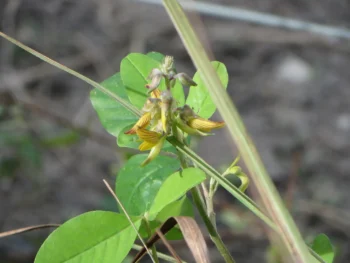
Smooth Rattlebox: A Non-Native Wildflower with Yellow Blooms
If you’ve ever wandered through the southeastern United States and spotted cheerful yellow flowers swaying in the breeze, you might have encountered smooth rattlebox (Crotalaria pallida var. obovata). This perennial herb has made itself quite at home in warmer regions of North America, though it originally hails from much farther away.
What Is Smooth Rattlebox?
Smooth rattlebox is a non-native perennial forb that belongs to the pea family. As a forb, it’s an herbaceous plant without significant woody tissue, making it quite different from shrubs or trees. The plant gets its common name from the distinctive rattling sound its seed pods make when mature and dry.
This species goes by several scientific synonyms, including Crotalaria falcata, Crotalaria mucronata, and Crotalaria obovata, which can sometimes cause confusion in plant identification.
Where Does It Grow?
Originally from tropical regions of Africa and Asia, smooth rattlebox has established itself across several U.S. states and territories. You’ll find it growing in Alabama, Florida, Georgia, Hawaii, Mississippi, North Carolina, South Carolina, Puerto Rico, and the U.S. Virgin Islands. The plant reproduces naturally in the wild and has become quite persistent in these warm climates.
- Species observed
- No observations
Should You Plant Smooth Rattlebox?
This is where things get a bit complicated. While smooth rattlebox isn’t officially listed as invasive or noxious, it is a non-native species that has naturalized across the southeastern United States. Here are some considerations:
Potential Benefits:
- Produces bright yellow, pea-like flowers that add color to landscapes
- Attracts pollinators like bees and butterflies
- Extremely easy to grow and requires minimal maintenance
- Drought tolerant once established
- Can serve as ground cover in naturalized areas
Potential Drawbacks:
- As a non-native species, it doesn’t support local ecosystems as well as native plants
- Self-seeds readily and can spread beyond intended areas
- Limited ornamental value compared to purpose-bred garden plants
- May compete with native wildflowers
Native Alternatives to Consider
Before planting smooth rattlebox, consider these native alternatives that provide similar benefits while supporting local wildlife:
- Wild senna (Senna hebecarpa) – Native yellow-flowered legume
- Partridge pea (Chamaecrista fasciculata) – Native annual with yellow flowers
- Wild indigo species (Amorpha spp.) – Native shrubs with attractive flower spikes
Growing Conditions and Care
If you decide to grow smooth rattlebox, you’ll find it remarkably undemanding:
Preferred Growing Conditions:
- Full sun exposure
- Well-drained soils (tolerates poor soils)
- USDA hardiness zones 8-11
- Drought tolerant once established
- Tolerates heat and humidity well
Planting and Care Tips:
- Easy to grow from seed – simply scatter in desired area
- Seeds readily in spring or fall
- Requires minimal watering after establishment
- No fertilization needed – actually prefers lean soils
- Deadhead spent flowers to prevent excessive self-seeding
- Monitor for spread and remove unwanted seedlings
The Bottom Line
Smooth rattlebox is an easy-to-grow plant that can add yellow blooms to your landscape with minimal effort. However, as a non-native species, it’s worth considering whether native alternatives might better serve both your garden goals and local ecosystems. If you do choose to plant it, be prepared to manage its tendency to self-seed and consider it best suited for naturalized or wildflower garden settings rather than formal landscapes.
Remember, the best garden choices often depend on your specific goals, location, and gardening philosophy. Whatever you decide, happy gardening!