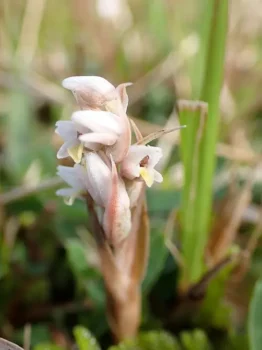
Soldier’s Orchid: A Quiet Ground Cover for Southern Gardens
If you’ve ever spotted tiny white flowers spiraling up slender stems in shaded corners of Southern gardens, you might have encountered soldier’s orchid (Zeuxine strateumatica). This unassuming little orchid has quietly made itself at home across the warmer regions of the United States, offering gardeners a low-maintenance ground cover option for those tricky shaded spots.
What is Soldier’s Orchid?
Soldier’s orchid is a perennial forb – essentially a non-woody flowering plant that comes back year after year. As an orchid, it might surprise you with its modest appearance compared to the flashy tropical orchids we often think of. This little ground-hugger produces small, creamy-white flowers arranged in distinctive spiral patterns along upright stems, typically blooming from fall through spring in warmer climates.
Where Does It Grow?
Originally hailing from Asia, soldier’s orchid has established itself across several U.S. states and territories. You’ll find it growing in Alabama, Florida, Georgia, Hawaii, Louisiana, Texas, and Puerto Rico. It’s considered a non-native species that has naturalized in these areas, meaning it reproduces and persists on its own without human intervention.
- Species observed
- No observations
Garden Appeal and Uses
Let’s be honest – soldier’s orchid won’t win any beauty contests. Its charm lies in its understated nature and reliability rather than showstopping blooms. Here’s what it brings to the garden:
- Low-maintenance ground cover for shaded areas
- Interesting spiral flower arrangement for close-up observation
- Year-round foliage in mild climates
- Tolerance for various moisture conditions
Growing Conditions
Soldier’s orchid is surprisingly adaptable for an orchid, which explains its success in naturalizing. It thrives in USDA hardiness zones 8-11 and prefers:
- Light: Shade to partial shade
- Soil: Moist, well-draining soil
- Water: Consistent moisture but not waterlogged
- Climate: Warm, humid conditions
The plant’s wetland status varies by region – it can handle both wet and dry conditions in most areas, though it prefers upland sites in Hawaii.
Should You Plant It?
This is where things get interesting. While soldier’s orchid isn’t considered invasive or harmful, it is a non-native species. If you’re looking for a low-maintenance ground cover for shaded areas, it could work well in naturalized garden settings or low-traffic areas where you want something that takes care of itself.
However, if you’re passionate about supporting native ecosystems, you might want to consider native alternatives instead. Look for native orchids in your region or other native shade-loving ground covers that provide similar benefits while supporting local wildlife and pollinators.
Care and Maintenance
One of soldier’s orchid’s biggest selling points is its low-maintenance nature. Once established, it requires minimal care:
- Water during dry spells, but avoid overwatering
- No fertilizer needed – it’s adapted to lean soils
- Spreads slowly by underground rhizomes
- Rarely bothered by pests or diseases
Wildlife Value
While soldier’s orchid produces flowers, it offers limited value to pollinators since it primarily self-pollinates. If supporting local wildlife is a priority, native alternatives would be a better choice for providing nectar and habitat for beneficial insects.
The Bottom Line
Soldier’s orchid is like that reliable friend who’s always there but never demands attention. It’s perfectly fine for gardeners who want a no-fuss ground cover for challenging shaded spots, especially in naturalized settings. Just remember that choosing native plants when possible helps support local ecosystems and wildlife. Whether you go with soldier’s orchid or seek out native alternatives, the key is creating a garden that works for both you and your local environment.