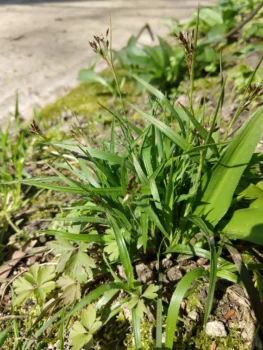
Southern Woodrush: A Shade-Loving Grass Alternative for Pacific Northwest Gardens
Looking for a low-maintenance, grass-like plant that actually thrives in shade? Meet southern woodrush (Luzula forsteri), a petite perennial that’s been quietly making itself at home in Oregon’s woodland gardens. While this isn’t a native species, it’s become a naturalized resident that some gardeners appreciate for its understated charm and ability to fill those tricky shady spots.
What Exactly Is Southern Woodrush?
Southern woodrush belongs to the rush family, making it a grass-like plant (technically called a graminoid) rather than a true grass. Don’t let that fool you though – it looks and behaves much like the grasses you know, just with a preference for shadier real estate. As a perennial, it comes back year after year, slowly forming small clumps through underground stems called rhizomes.
Where You’ll Find It Growing
Originally from Europe, southern woodrush has established itself in Oregon, where it reproduces on its own in the wild. It’s what botanists call a naturalized species – not native, but not aggressively invasive either.
- Species observed
- No observations
The Good, The Bad, and The Neutral
Here’s the honest truth about southern woodrush: it’s neither a garden superstar nor a garden villain. It’s more like that quiet neighbor who keeps their yard tidy and doesn’t cause any drama.
Why you might want it:
- Thrives in shade where many plants struggle
- Extremely low maintenance once established
- Tolerates poor soils that would frustrate other plants
- Forms neat, compact clumps without aggressive spreading
- Hardy in zones 6-9, perfect for Pacific Northwest conditions
Why you might pass:
- Not native to North America
- Limited wildlife benefits compared to native alternatives
- Fairly inconspicuous – won’t be winning any wow factor awards
- Wind-pollinated, so no help for your pollinator garden goals
Growing Southern Woodrush Successfully
If you decide to give southern woodrush a try, you’ll find it refreshingly easy to please. This plant actually prefers the conditions that frustrate many gardeners – shade and moisture.
Ideal growing conditions:
- Partial to full shade (morning sun is okay)
- Moist, well-draining soil
- Cool, humid climates
- pH neutral to slightly acidic soil
Plant it in spring or fall, giving each clump about 12 inches of space. Water regularly the first year to help it establish, then sit back and let it do its thing. Southern woodrush is remarkably drought-tolerant once settled in, though it looks happiest with consistent moisture.
Design Ideas and Garden Roles
Southern woodrush excels as a subtle groundcover in woodland gardens and naturalistic landscapes. Use it to fill gaps between larger shade plants, create textural contrast with broad-leafed hostas or ferns, or let it naturalize along shaded pathways. It’s particularly useful in those problem spots where grass won’t grow but you need something green and tidy.
The plant typically stays compact, reaching about 6-12 inches tall and wide, making it perfect for smaller spaces or as an understory plant in layered shade gardens.
Consider Native Alternatives
While southern woodrush isn’t problematic, supporting native ecosystems is always a great choice. Consider these Pacific Northwest natives that offer similar benefits:
- Slender rush (Juncus tenuis) – a native rush with similar texture
- Pacific sedge (Carex obnupta) – broader leaves but excellent for wet shade
- Dune sedge (Carex pansa) – perfect for drier shade conditions
The Bottom Line
Southern woodrush is like a reliable friend – not flashy, but dependable and undemanding. If you have a challenging shady spot and appreciate subtle, low-maintenance plants, it might be worth considering. Just remember that choosing native plants when possible helps support local wildlife and ecosystems. Whether you go native or not, any plant that helps you create a thriving garden space is a step in the right direction!