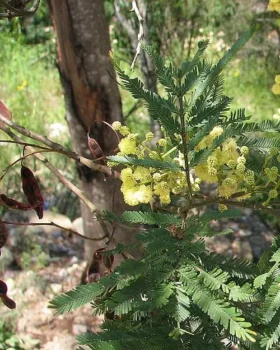
South Wales Wattle: A Golden Beauty for Warm Climate Gardens
If you’re looking for a fast-growing tree that brings sunshine to your landscape, the South Wales wattle (Acacia parramattensis) might catch your eye. This Australian native has made itself quite at home in Hawaii, where it’s become a naturalized resident that thrives in the tropical climate.
What Is South Wales Wattle?
South Wales wattle is a perennial tree that typically grows as a single-trunked specimen reaching 13-16 feet in height, though it can sometimes develop a multi-stemmed growth habit depending on environmental conditions. Originally from the New South Wales region of eastern Australia, this acacia species has adapted well to life in Hawaii, where it reproduces naturally in the wild.
Geographic Distribution
While native to eastern Australia, South Wales wattle has established populations in Hawaii, where it grows successfully in the warm, tropical climate. The species has proven quite adaptable to its new Pacific island home.
- Species observed
- No observations
Why Gardeners Love (and Sometimes Question) This Tree
South Wales wattle offers several appealing characteristics that make it attractive to gardeners:
- Stunning golden-yellow spherical flower heads that create a spectacular display
- Feathery, delicate foliage that adds textural interest
- Fast growth rate for quick landscape impact
- Excellent drought tolerance once established
- Attracts bees and other beneficial pollinators
However, it’s important to note that this is a non-native species. While it’s not currently listed as invasive, responsible gardeners may want to consider native alternatives that provide similar benefits while supporting local ecosystems.
Perfect Garden Settings
South Wales wattle shines in Mediterranean-style gardens, xerophytic landscapes, and coastal settings. It works beautifully as:
- A specimen tree for focal points
- Part of a windbreak planting
- Erosion control on slopes
- Background planting in drought-tolerant gardens
Growing Conditions and Care
This adaptable tree thrives in USDA hardiness zones 9-11, making it suitable for warm climate regions. Here’s what South Wales wattle needs to flourish:
- Sunlight: Full sun exposure for best flowering
- Soil: Well-drained soils of various types
- Water: Drought tolerant once established; minimal watering needed
- Maintenance: Light pruning after flowering to maintain shape
Planting and Care Tips
Getting your South Wales wattle off to a good start is relatively straightforward:
- Plant in a location with excellent drainage
- Water regularly during the first growing season to establish roots
- Reduce watering significantly once established
- Prune lightly after the flowering period ends
- Expect rapid growth, especially in favorable conditions
A Word About Native Alternatives
While South Wales wattle can be a beautiful addition to appropriate gardens, consider exploring native tree species that provide similar aesthetic appeal and ecological benefits. Native plants support local wildlife populations and are naturally adapted to your regional growing conditions. Consult with local native plant societies or extension services to discover indigenous alternatives that might work well in your landscape design.
Whether you choose South Wales wattle or a native alternative, the key to success lies in selecting plants that match your site conditions and garden goals while considering their broader environmental impact.