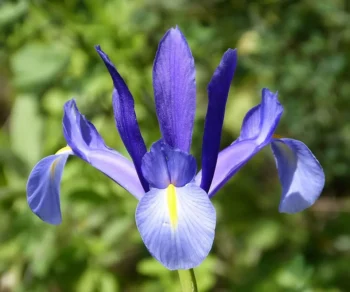
Spanish Iris: A Mediterranean Beauty for Your Garden
If you’re looking to add some Old World charm to your garden, the Spanish iris might just be the ticket. This elegant bulb produces stunning flowers that look like they’ve stepped straight out of a European countryside painting. But before you start digging holes for these beauties, let’s dive into what makes them tick and whether they’re right for your garden.
What Exactly is Spanish Iris?
Spanish iris (Iris xiphium) is a perennial bulb that’s been winning hearts in gardens for centuries. Despite its common name, this Mediterranean native has made itself at home in various parts of the world, including Louisiana and Tennessee in the United States, where it now grows and reproduces on its own in the wild.
- Species observed
- No observations
This charming plant belongs to the iris family and is technically classified as a forb – basically a flowering plant that doesn’t develop woody stems like trees or shrubs. Instead, it dies back to its underground bulb each year and emerges fresh each spring, ready to put on another show.
Why You Might Fall in Love with Spanish Iris
Spanish iris has some serious visual appeal that’s hard to ignore. In late spring to early summer, it produces elegant flowers in shades of blue, purple, yellow, and white, often adorned with distinctive markings that add an artistic touch to each bloom. The sword-like foliage creates a nice structural element in the garden even before the flowers appear.
Here’s what makes Spanish iris particularly appealing:
- Gorgeous cut flowers that last well in vases
- Relatively low maintenance once established
- Attracts bees and other beneficial pollinators
- Perfect for naturalizing in Mediterranean-style gardens
- Adds spring color to rock gardens and perennial borders
The Growing Game: How to Keep Spanish Iris Happy
Spanish iris isn’t particularly fussy, but like most Mediterranean plants, it has some definite preferences. Think sunny and well-drained and you’re on the right track.
USDA Hardiness Zones: Spanish iris thrives in zones 6-9, making it suitable for a good chunk of the United States.
Growing Conditions: These bulbs absolutely must have well-draining soil – they’ll rot faster than you can say soggy bulb if left in waterlogged conditions. Full sun is ideal, though they can tolerate some light shade. They actually prefer dry summers, which makes them quite drought-tolerant once established.
Planting and Care Tips
Getting Spanish iris established is pretty straightforward if you follow a few key guidelines:
- Plant in fall: Get those bulbs in the ground about 6-8 weeks before your first hard frost
- Depth matters: Plant bulbs about 4-6 inches deep and 3-4 inches apart
- Let it be: After blooming, resist the urge to cut back the foliage immediately – let it die back naturally so the bulb can store energy for next year
- Division: Every 3-4 years, dig up and divide clumps to prevent overcrowding and maintain vigor
- Water wisely: Water during the growing season but allow the soil to dry out during summer dormancy
A Word About Native Alternatives
While Spanish iris isn’t native to North America, it’s naturalized in some areas without currently being classified as invasive. However, if you’re passionate about supporting local ecosystems, you might consider these native alternatives that offer similar spring beauty:
- Blue flag iris (Iris versicolor) for wetter areas
- Wild iris (Iris missouriensis) for western gardens
- Southern blue flag (Iris virginica) for southeastern regions
The Bottom Line
Spanish iris can be a delightful addition to the right garden setting. It’s particularly well-suited for Mediterranean-style landscapes, rock gardens, and areas where you want to create a naturalized look. The key to success is giving it the well-drained, sunny conditions it craves and then stepping back to let it do its thing.
Just remember that while it’s not currently flagged as invasive, it is a non-native species that has shown it can spread on its own. Plant responsibly, and consider pairing it with native species to create a balanced garden ecosystem that supports local wildlife while still enjoying the beauty of this Mediterranean charmer.