Spiked Centaury: A Delicate European Wildflower for American Gardens
Meet spiked centaury (Centaurium spicatum), a charming little wildflower that’s quietly made itself at home in parts of the eastern United States. This petite European native might not be the showiest plant in your garden, but it brings a delicate, old-world charm that’s hard to resist.
What Is Spiked Centaury?
Spiked centaury is a small annual or biennial forb—basically a non-woody flowering plant—that belongs to the gentian family. You might also see it listed under its synonym Schenkia spicata in some botanical references. This little plant stays true to its humble nature, rarely drawing attention to itself but adding subtle beauty wherever it grows.
Where You’ll Find It Growing Wild
While spiked centaury originally hails from Europe and the Mediterranean, it has established populations along the eastern seaboard of the United States. You can find it growing wild in Delaware, Maryland, Massachusetts, New Jersey, and Virginia. The plant has naturalized in these areas, meaning it reproduces on its own without human intervention and has become part of the local landscape.
- Species observed
- No observations
What Does Spiked Centaury Look Like?
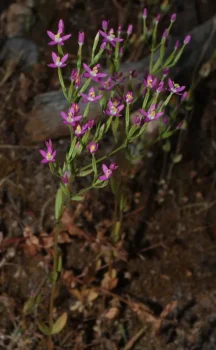
Don’t expect a dramatic garden statement from this modest plant. Spiked centaury produces small, delicate pink flowers arranged in distinctive spike-like clusters—hence the spiked part of its name. The flowers are quite tiny, but they make up for their size with their sweet, understated charm. The plant itself stays relatively compact, making it perfect for filling in gaps or adding texture to naturalized areas.
Growing Conditions and Care
One of spiked centaury’s best qualities is its easygoing nature. Here’s what this little plant prefers:
- Sunlight: Full sun for the best flower production
- Soil: Moist to wet soils, though it’s quite adaptable
- Moisture: Consistent moisture is ideal, but it can handle some variation
- Soil type: Tolerates clay soils that might challenge other plants
The plant is remarkably low-maintenance once established. It’s hardy in USDA zones 3-9, making it suitable for a wide range of climates across the United States.
Wetland Wonder
Spiked centaury is classified as a facultative wetland plant across multiple regions, including the Atlantic and Gulf Coastal Plain, Eastern Mountains and Piedmont, and Northcentral & Northeast regions. This means it usually prefers wetland conditions but can adapt to drier sites when needed. If you have a spot in your garden that stays consistently moist or even occasionally soggy, spiked centaury might be just the ticket.
Garden Role and Design Uses
Think of spiked centaury as a supporting actor rather than the leading lady in your garden drama. It works beautifully as:
- Ground cover in naturalized areas
- Filler in cottage-style gardens
- Addition to wildflower meadows
- Border plant in informal landscapes
The plant self-seeds readily, so you might find pleasant surprises popping up in unexpected corners of your garden.
Pollinator Benefits
While small, spiked centaury’s flowers attract beneficial insects, including small butterflies and other pollinators. Every little bit helps when it comes to supporting our pollinator friends, and this unassuming plant does its part.
Should You Grow Spiked Centaury?
Spiked centaury is a perfectly pleasant addition to gardens, especially if you appreciate subtle, naturalistic plantings. Since it’s not native to North America, you might want to consider some native alternatives that would provide similar benefits while supporting local ecosystems:
- Wild bergamot (Monarda fistulosa)
- New England aster (Symphyotrichum novae-angliae)
- Purple coneflower (Echinacea purpurea)
That said, spiked centaury isn’t considered invasive or problematic, so if you’re drawn to its quiet charm and it fits your garden’s needs, there’s no reason not to include it. Just remember that supporting native plants when possible is always a good choice for local wildlife and ecosystem health.
Planting and Care Tips
Growing spiked centaury is refreshingly simple:
- Plant seeds in spring or fall
- Choose a spot with consistent moisture
- Provide full sun for best results
- Allow plants to self-seed for natural spread
- Minimal fertilization needed—this plant prefers lean conditions
Once established, spiked centaury pretty much takes care of itself. It’s the kind of plant that rewards the hands-off gardener who appreciates nature’s quiet moments.