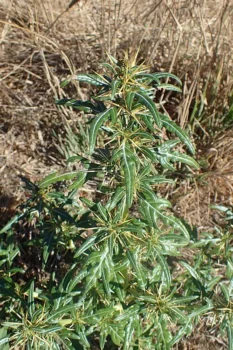
Spiny Cocklebur: A Weedy Wanderer You’ll Want to Know (But Probably Not Grow)
Ever found yourself picking spiky little burs off your socks after a walk through a vacant lot? There’s a good chance you’ve made the acquaintance of spiny cocklebur (Xanthium spinosum), a tenacious annual that’s made itself at home across North America despite its foreign origins.
What Exactly Is Spiny Cocklebur?
Spiny cocklebur is an annual forb – basically a non-woody plant that completes its entire life cycle in one growing season. Originally hailing from South America and the Mediterranean region, this sturdy little survivor has hitchhiked its way across continents and now calls much of North America home.
As a member of the sunflower family, you might expect something cheerful and bright, but spiny cocklebur is more like that distant cousin who shows up uninvited and refuses to leave. It’s not particularly pretty, but it’s certainly memorable – especially if you’ve ever had the pleasure of removing its clingy seed pods from your clothing or your dog’s fur.
Where You’ll Find This Prickly Character
This adaptable annual has spread across an impressive range, establishing populations in Alabama, Arizona, California, Colorado, Connecticut, Delaware, District of Columbia, Florida, Georgia, Idaho, Illinois, Indiana, Iowa, Kansas, Kentucky, Maine, Maryland, Massachusetts, Michigan, Mississippi, Missouri, Montana, Nebraska, Nevada, New Hampshire, New Jersey, New Mexico, New York, North Carolina, Ohio, Oregon, Pennsylvania, Rhode Island, South Carolina, Tennessee, Texas, Utah, Virginia, Washington, and West Virginia. It’s also found its way into several Canadian provinces including New Brunswick, Ontario, Quebec, and Saskatchewan.
- Species observed
- No observations
Should You Plant Spiny Cocklebur?
Here’s the short answer: probably not. While this plant isn’t officially classified as invasive everywhere, it has all the hallmarks of a troublemaker. It spreads readily, isn’t particularly attractive, and those spiny burs can be a real nuisance for both people and animals.
Spiny cocklebur thrives in disturbed areas, vacant lots, roadsides, and waste ground – basically anywhere the soil has been messed with and other plants are struggling. Its superpower is being incredibly tough and drought-tolerant, which sounds great until you realize it means this plant can outcompete more desirable species.
What Does It Look Like?
Spiny cocklebur typically grows as a branching annual that can reach 1-4 feet tall. The leaves are somewhat triangular with toothed edges, and the whole plant has a rather rough, weedy appearance. The flowers are small and unremarkable – greenish and easy to miss. But those seed pods? Those you’ll definitely notice. They’re oval-shaped burs covered in hooked spines that grab onto anything that brushes past.
Growing Conditions (If You Must Know)
This plant is frustratingly easy to grow, which is part of the problem. It tolerates:
- Poor soils and disturbed ground
- Drought conditions
- USDA hardiness zones 4-10
- Full sun to partial shade
- Various soil types, though it prefers well-draining conditions
The wetland status across all regions is Facultative Upland, meaning it usually sticks to drier ground but can handle some moisture if needed.
Better Alternatives for Your Garden
Instead of welcoming this prickly visitor into your garden, consider these native alternatives that offer similar toughness without the invasive tendencies:
- Native sunflowers (Helianthus species) for sunny, dry areas
- Wild bergamot (Monarda fistulosa) for pollinator support
- Purple coneflower (Echinacea purpurea) for drought tolerance and wildlife value
- Black-eyed Susan (Rudbeckia species) for reliable blooms and easy care
If It Shows Up Anyway
Since spiny cocklebur reproduces readily from seed and those burs are excellent at hitchhiking, don’t be surprised if it appears in your garden without an invitation. The best approach is to pull young plants before they set seed, especially after rain when the soil is soft. Wear gloves – those spines aren’t just for show!
Remember, the key to managing any unwanted plant is persistence and prevention. Remove plants before they can produce those clingy seed pods, and you’ll save yourself a lot of trouble down the road.
While spiny cocklebur might not win any beauty contests, understanding these tough, weedy characters helps us become better gardeners and land stewards. Sometimes the most important plants to know about are the ones we choose not to grow!