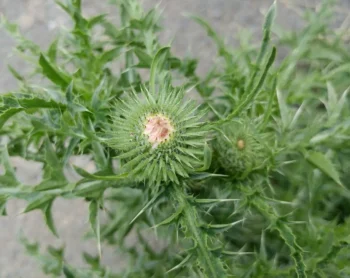
Spiny Plumeless Thistle: The Invasive Weed You Don’t Want in Your Garden
If you’ve spotted a tall, spiny purple-flowered plant that looks like it belongs in a medieval castle’s moat rather than your garden, you might be looking at spiny plumeless thistle (Carduus acanthoides). While this European native might catch your eye with its dramatic appearance, it’s definitely not a plant you want to welcome into your landscape.
What Is Spiny Plumeless Thistle?
Spiny plumeless thistle is a biennial forb, meaning it completes its life cycle over two years and lacks significant woody tissue. This non-native species originally hails from Europe and western Asia but has made itself quite at home across North America – perhaps a little too much at home for our liking.
This robust plant can tower between 3 to 6 feet tall, sporting deeply lobed, spiny leaves that seem designed to keep everything (including gardeners) at arm’s length. Its purple flower heads appear in summer, creating clusters of blooms that, while admittedly eye-catching, spell trouble for native ecosystems.
Where You’ll Find It (Unfortunately)
Spiny plumeless thistle has spread extensively across North America, establishing populations in British Columbia, New Brunswick, California, Nova Scotia, Ontario, Colorado, Connecticut, Quebec, Delaware, Idaho, Illinois, Iowa, Kansas, Kentucky, Maine, Maryland, Massachusetts, Michigan, Minnesota, Montana, Nebraska, New Jersey, New Mexico, New York, North Carolina, North Dakota, Ohio, Oklahoma, Pennsylvania, Rhode Island, South Dakota, Texas, Vermont, Virginia, Washington, West Virginia, Wisconsin, and Wyoming.
- Species observed
- No observations
The Problem with This Prickly Customer
Here’s where things get serious: spiny plumeless thistle is classified as invasive in several regions, with Wisconsin specifically listing it as Restricted. This means it’s recognized as a threat to native plant communities and ecosystems. The plant thrives in disturbed soils, roadsides, and fields, quickly establishing itself and crowding out native species that wildlife depends on.
This thistle is particularly problematic because it:
- Reproduces rapidly and spreads aggressively
- Competes with native plants for resources
- Can dominate disturbed areas
- Is difficult to control once established
Why You Shouldn’t Plant It
While spiny plumeless thistle might seem like a hardy, low-maintenance option for difficult growing conditions (it’s quite drought-tolerant and thrives in USDA zones 3-9), planting it is both ecologically irresponsible and potentially illegal in some areas. Instead of supporting native wildlife and maintaining biodiversity, you’d be contributing to the problem of invasive species.
Better Alternatives for Your Garden
If you’re drawn to the dramatic, spiky appearance of thistles, consider these native alternatives that offer similar visual appeal without the ecological baggage:
- Native thistles like Cirsium species that are appropriate for your region
- Purple coneflower (Echinacea) for purple blooms that attract pollinators
- Wild bergamot (Monarda) for spiky flower clusters
- Blazing star (Liatris) for tall, dramatic purple spikes
What to Do If You Have It
If spiny plumeless thistle has already invaded your property, early intervention is key. Small populations can be hand-pulled (wear thick gloves!), while larger infestations may require more intensive management. Contact your local extension office or invasive species coordinator for guidance on the best removal methods for your situation.
The Bottom Line
While spiny plumeless thistle might look impressive with its fortress-like spines and purple blooms, it’s a classic example of a plant that’s more trouble than it’s worth. Instead of inviting this invasive species into your garden, choose native alternatives that will support local wildlife and maintain the ecological balance we all depend on. Your local birds, butterflies, and beneficial insects will thank you for it!