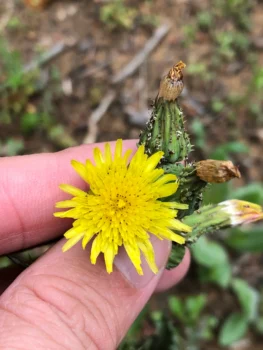
Spiny Sowthistle: A Controversial Garden Visitor Worth Understanding
If you’ve ever spotted a tall plant with bright yellow flowers and prickly leaves growing in a vacant lot or along a roadside, chances are you’ve encountered spiny sowthistle (Sonchus asper). This annual forb has quite the reputation – some gardeners consider it a persistent weed, while others appreciate its late-season blooms and wildlife value. Let’s dive into what makes this plant tick and whether it deserves a spot in your garden.
What Is Spiny Sowthistle?
Spiny sowthistle is an annual herbaceous plant that belongs to the sunflower family. As a forb, it lacks woody stems and dies back completely each year, but don’t let that fool you – this plant knows how to make its presence known during its growing season. The spiny part of its name comes from the prickly edges of its leaves, which can give you a gentle reminder if you handle them carelessly.
You might also encounter this plant under various scientific names, as it has several synonyms including Sonchus asper ssp. asper and Sonchus nymanii, but they all refer to the same species.
Native Status and Geographic Distribution
Here’s where things get interesting – spiny sowthistle isn’t native to North America. This European, North African, and western Asian native has made itself completely at home across the continent. It’s been introduced and now reproduces spontaneously throughout all 50 US states, every Canadian province and territory, plus Puerto Rico. That’s quite an impressive colonization effort for a plant that wasn’t invited to the party!
- Species observed
- No observations
What Does Spiny Sowthistle Look Like?
Spiny sowthistle is hard to miss when it’s in full swing. This annual can reach heights of 3-6 feet, creating quite a presence in the landscape. Its most distinctive features include:
- Bright yellow, dandelion-like flowers that bloom from late summer into fall
- Deeply lobed leaves with spiny edges that clasp around the stem
- Tall, branching stems that give the plant an architectural quality
- Milky white sap that emerges when stems or leaves are broken
Growing Conditions and Hardiness
One reason spiny sowthistle has spread so successfully is its adaptability. This tough plant thrives in USDA hardiness zones 3-10, which covers most of North America. It’s remarkably unfussy about its growing conditions, tolerating poor soils and drought once established. The plant prefers full sun to partial shade and shows up in a variety of habitats.
According to wetland status classifications, spiny sowthistle is quite flexible about moisture levels. In most regions, it’s classified as Facultative or Facultative Upland, meaning it can grow in both wetland and non-wetland conditions, though it typically prefers drier sites.
Wildlife and Pollinator Benefits
Before you write off spiny sowthistle entirely, consider its ecological contributions. While large animals and terrestrial birds only use it for 2-5% of their diet and sparse cover, the plant’s late-season flowers provide valuable nectar when many other blooms have faded. Bees, butterflies, and other pollinators appreciate this extended flowering period, especially in late summer and fall when food sources can be scarce.
Should You Plant Spiny Sowthistle?
This is where gardening gets personal. Spiny sowthistle isn’t currently classified as invasive or noxious in most areas, but its aggressive self-seeding nature means it can quickly take over if conditions are right. Here are some considerations:
Reasons you might welcome it:
- Provides late-season pollinator food
- Requires zero maintenance once established
- Adds height and texture to wild or naturalized areas
- Thrives in poor conditions where other plants struggle
Reasons you might want to pass:
- Can self-seed aggressively and spread beyond intended areas
- May crowd out native plants
- Spiny leaves can be unpleasant to handle
- Often considered weedy in appearance
Native Alternatives to Consider
If you love the idea of late-season yellow flowers and pollinator support but want to stick with native options, consider these alternatives:
- Goldenrod species (Solidago) for late-season yellow blooms
- Wild bergamot (Monarda fistulosa) for extended flowering
- Native asters for fall color and pollinator support
- Jerusalem artichoke (Helianthus tuberosus) for tall, architectural presence
Planting and Care Tips
If you decide to give spiny sowthistle a try, the good news is that it’s incredibly low-maintenance. Seeds germinate easily in spring, and the plants will likely self-seed for future years. Simply scatter seeds in early spring on prepared soil, keep them lightly moist until germination, and then step back – this plant pretty much takes care of itself.
Just remember to deadhead flowers if you want to prevent self-seeding, and wear gloves when handling to avoid the spiny leaves. In managed garden settings, you may want to contain it to specific areas to prevent unwanted spread.
The Bottom Line
Spiny sowthistle occupies that interesting gray area between wildflower and weed. While it’s not native and can be aggressive, it’s also not typically considered invasive and does provide some ecological benefits. Whether it belongs in your garden depends on your goals, maintenance preferences, and tolerance for plants that make their own rules. Whatever you decide, understanding this common plant helps you make informed choices about your landscape – and maybe gives you a new appreciation for those yellow blooms you see growing wild around your neighborhood.