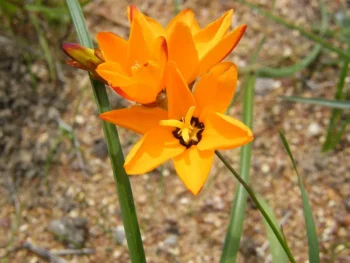
Spotted African Cornlily: A Colorful Addition to Water-Wise Gardens
If you’re looking for a low-maintenance flowering bulb that thrives in dry conditions, the spotted African cornlily (Ixia maculata) might just catch your eye. This charming perennial brings a splash of color to gardens while requiring minimal fuss once established.
What is Spotted African Cornlily?
Spotted African cornlily is a perennial forb that grows from underground bulbs. As its common name suggests, this plant produces lovely flowers adorned with distinctive dark spots that give it real character. Don’t let the technical classification as a forb intimidate you – it simply means it’s a non-woody flowering plant that dies back to ground level each year.
Where Does It Come From?
Originally hailing from South Africa’s Western Cape region, this plant has found a new home in California, where it grows and reproduces on its own in the wild. While it’s not native to North America, it has established itself as a naturalized resident in suitable climates.
- Species observed
- No observations
Garden Appeal and Design Role
The spotted African cornlily earns its keep in the garden through its eye-catching blooms and drought tolerance. Here’s what makes it special:
- Produces clusters of colorful flowers with distinctive dark spots
- Blooms typically appear in spring to early summer
- Perfect for adding vertical interest and color to dry garden areas
- Works beautifully in Mediterranean-style landscapes
- Excellent choice for rock gardens and naturalized plantings
Growing Conditions and Care
One of the best things about spotted African cornlily is how easy-going it can be once you understand its preferences:
- Climate: Thrives in USDA hardiness zones 9-11
- Sunlight: Loves full sun exposure
- Soil: Requires well-draining soil – soggy conditions are its enemy
- Water: Drought-tolerant once established; actually prefers dry summers
- Maintenance: Very low maintenance after the first year
Planting and Care Tips
Getting your spotted African cornlily off to a good start is straightforward:
- Plant bulbs in fall for spring blooms
- Choose a sunny, well-draining location
- Allow the plant to go dormant during summer months
- Avoid overwatering, especially during dormancy
- Mulch lightly to suppress weeds but don’t cover the bulbs too deeply
Wildlife and Pollinator Benefits
While not a native species, spotted African cornlily does provide some benefits to local wildlife. The flowers attract bees and other small pollinators during blooming season, contributing to the garden ecosystem.
Should You Plant It?
Spotted African cornlily can be a delightful addition to the right garden, especially if you’re creating a water-wise landscape or Mediterranean-style design. However, since it’s not native to North America, you might also consider exploring native alternatives that provide similar benefits while supporting local ecosystems.
If you do choose to grow spotted African cornlily, it’s a relatively trouble-free plant that rewards minimal effort with charming spotted blooms. Just remember that it’s adapted to a specific climate pattern – wet winters and dry summers – so it performs best in areas that can provide these conditions.
The Bottom Line
Whether spotted African cornlily belongs in your garden depends on your goals and growing conditions. It’s an attractive, low-maintenance option for dry gardens in suitable climates, but native plant enthusiasts might prefer to explore indigenous alternatives that offer similar drought tolerance and spring color. Whatever you choose, the key is selecting plants that match both your garden’s conditions and your personal gardening philosophy.