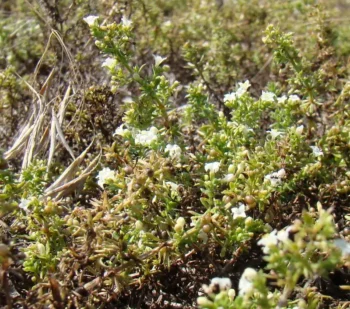
Spreading Bedstraw: A Lesser-Known Ground-Hugging Plant
If you’ve stumbled across the name spreading bedstraw in your plant research, you might be wondering what exactly this low-growing perennial is all about. Galium humifusum, as botanists call it, is one of those plants that flies under the radar in most gardening circles—and there are some good reasons why.
What Is Spreading Bedstraw?
Spreading bedstraw is a perennial forb, which simply means it’s a non-woody herbaceous plant that comes back year after year. The scientific name gives us a big clue about its growth habit: humifusum literally means spread on the ground, so you can expect this plant to stay low and sprawl outward rather than reaching for the sky.
This species belongs to the bedstraw family, and like its relatives, it’s likely to produce small, delicate flowers. However, detailed information about this particular species is surprisingly scarce in horticultural literature.
Where Does It Grow?
Here’s where things get interesting (or perhaps concerning, depending on your perspective): spreading bedstraw isn’t actually native to North America. It’s an introduced species that has established itself and reproduces on its own in the wild. Currently, it’s documented in Washington state, though its presence may be more limited than other bedstraw species.
- Species observed
- No observations
The plant’s original range appears to be Eurasian, based on its botanical synonyms and classification history.
Should You Plant Spreading Bedstraw?
This is where we need to have an honest conversation. While spreading bedstraw isn’t currently listed as invasive or noxious, there are several factors that might make you pause before adding it to your garden:
- Limited information about its garden performance and requirements
- Non-native status means it won’t support local ecosystems as effectively as native plants
- Uncertainty about its long-term behavior in North American landscapes
- Lack of established sources for garden-worthy specimens
Better Native Alternatives
Instead of gambling on spreading bedstraw, consider these native ground-covering alternatives that will provide similar low-growing coverage while supporting local wildlife:
- Wild ginger (Asarum canadense) – Beautiful heart-shaped leaves for shade
- Creeping phlox (Phlox subulata) – Gorgeous spring flowers in sunny spots
- Wild strawberry (Fragaria virginiana) – Edible berries plus lovely white flowers
- Wintergreen (Gaultheria procumbens) – Evergreen coverage with red berries
The Bottom Line
While spreading bedstraw might sound intriguing as a ground cover option, the combination of limited growing information and non-native status makes it a questionable choice for most gardeners. Your garden—and local ecosystem—will likely benefit more from well-researched native alternatives that provide similar coverage with added wildlife benefits.
If you’re specifically interested in bedstraw plants, look into native Galium species in your area, such as northern bedstraw (Galium boreale) or sweet-scented bedstraw (Galium triflorum), which offer the bedstraw family charm while supporting local pollinators and wildlife.
Sometimes the best gardening decision is knowing when to pass on a plant, especially when there are so many fantastic native options waiting to shine in your landscape!